– Touch Controls
– Bluetooth 5.4
– Profile: HSP/ HFP/ A2DP/ AVRCP
– Codecs: SBC/AAC/LDAC/aptX/aptX Adaptive/aptX Lossless
– BT signal range: 10 meters
– Waterproof Rating: IPX5
– ANC and Ambient sound (4 modes)
– PeatsAudio APP – EQ presets & customization
– Low Latency mode (60ms)
– 6 Mics AI ENC for calls
– Dual-device connectivity
– Play time: 7h
– Battery life of earphone: 37h
– Charging time: 1h (earphones) 2h (charging case)
– Earphones battery: 35mAh
– Charging case battery: 400mAh
– Input: 5V-1A
– Charging by USB-C port
– Earphones material: plastic + aluminum
– Case material: plastic
– Case size: 4.2cm [H] × 6.8cm [W] × 2.9cm [D]
– Weight: 6g (one side)(without tips)
– Case weight: 41.4g (without earphones)
– Total weight (box, earphones, etc): 208.6g
– Packaging size 12.7cm [H] x 12.5cm [W] x 5.6cm [D]
Total Score
Introduction
Hello everyone, as we approach the end of January!
Today, we’ll be reviewing a product that made a huge splash in the TWS world. Any guesses? Yes, here it is: the Soundpeats H3!
Designed specifically for audiophiles, let’s see how the H3 sounds to an audiophile’s ear.
The product I have was provided to me by Soundpeats. We thank them for supporting independent reviews and accepting our principles of honesty.
Before starting this review, I used the Soundpeats H3 for a total of about 150 hours.
Design & Build
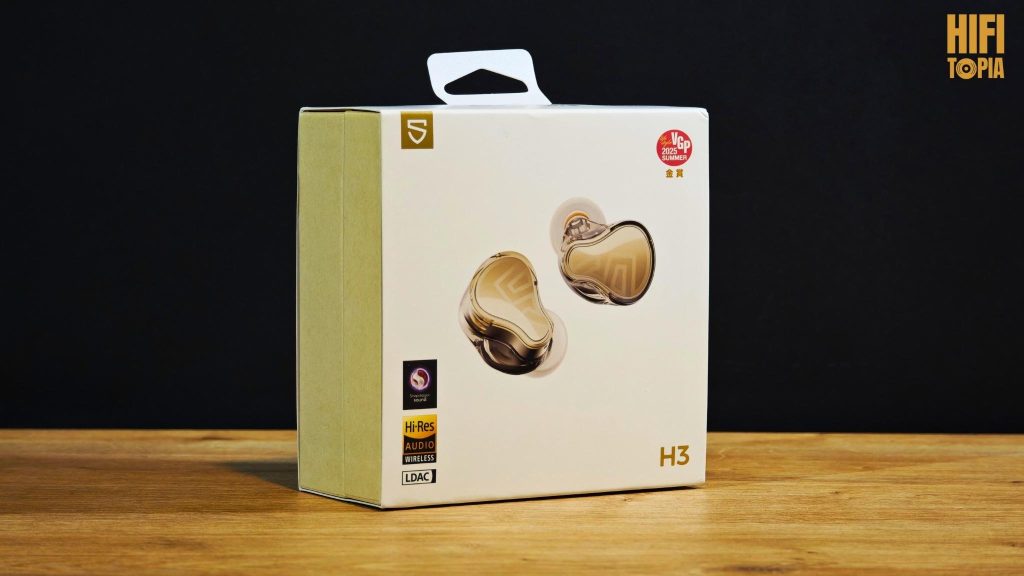
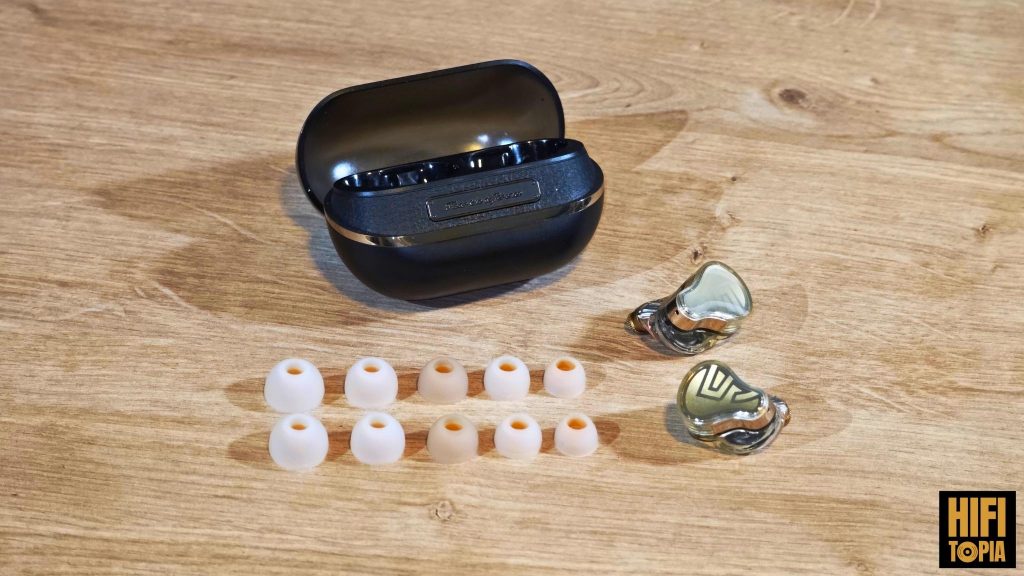
The Soundpeats H3 comes in a sleek and simple box. While the inclusion of five sizes of ear tips is great in itself, check this out: there are also cute stickers. The full box contents are as follows:
- H3 earphones.
- 5 pairs of eartips (SS/M/L/XL).
- Charging case.
- USB-A to USB-C cable.
- Manual and cute stickers.

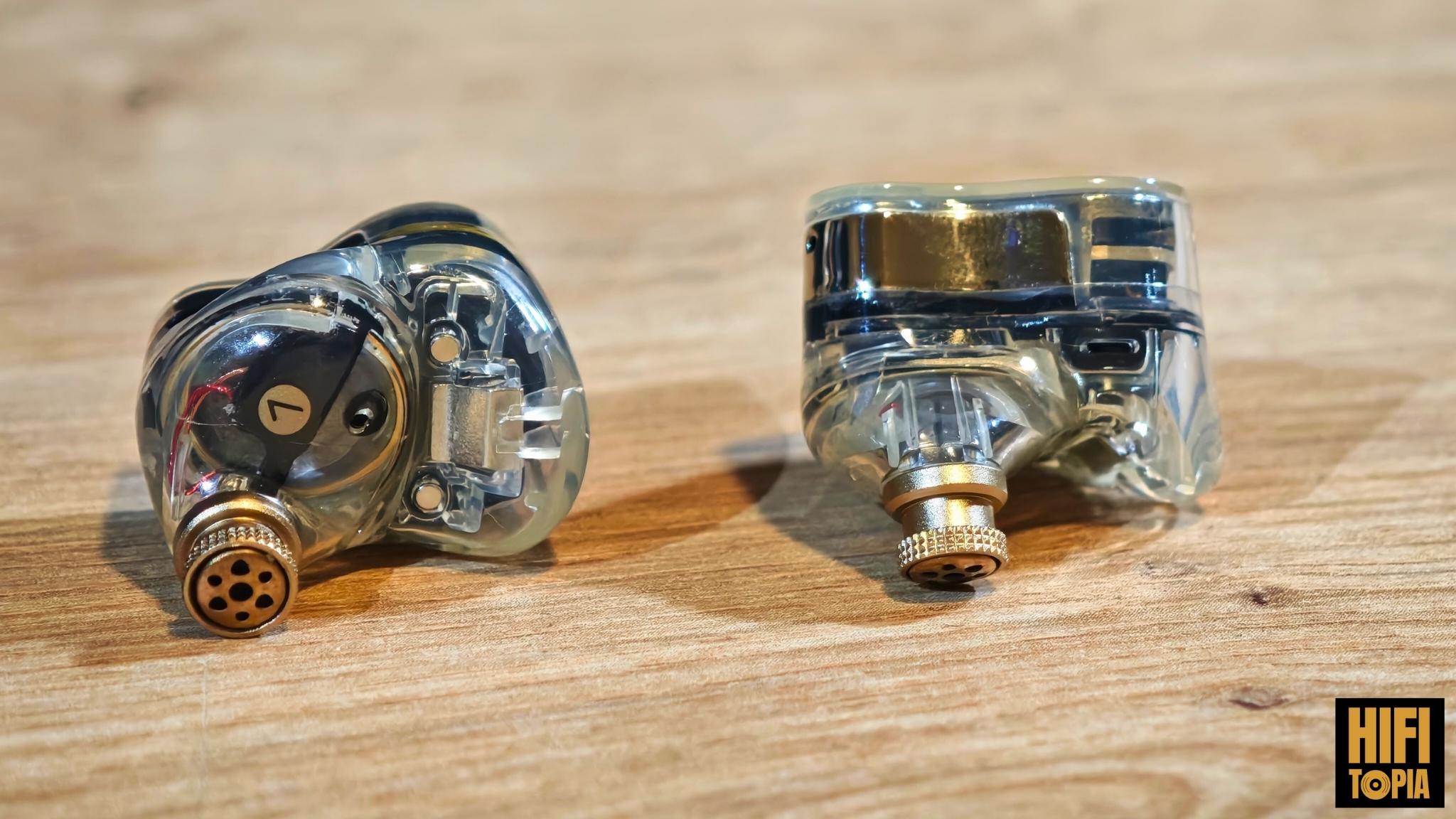
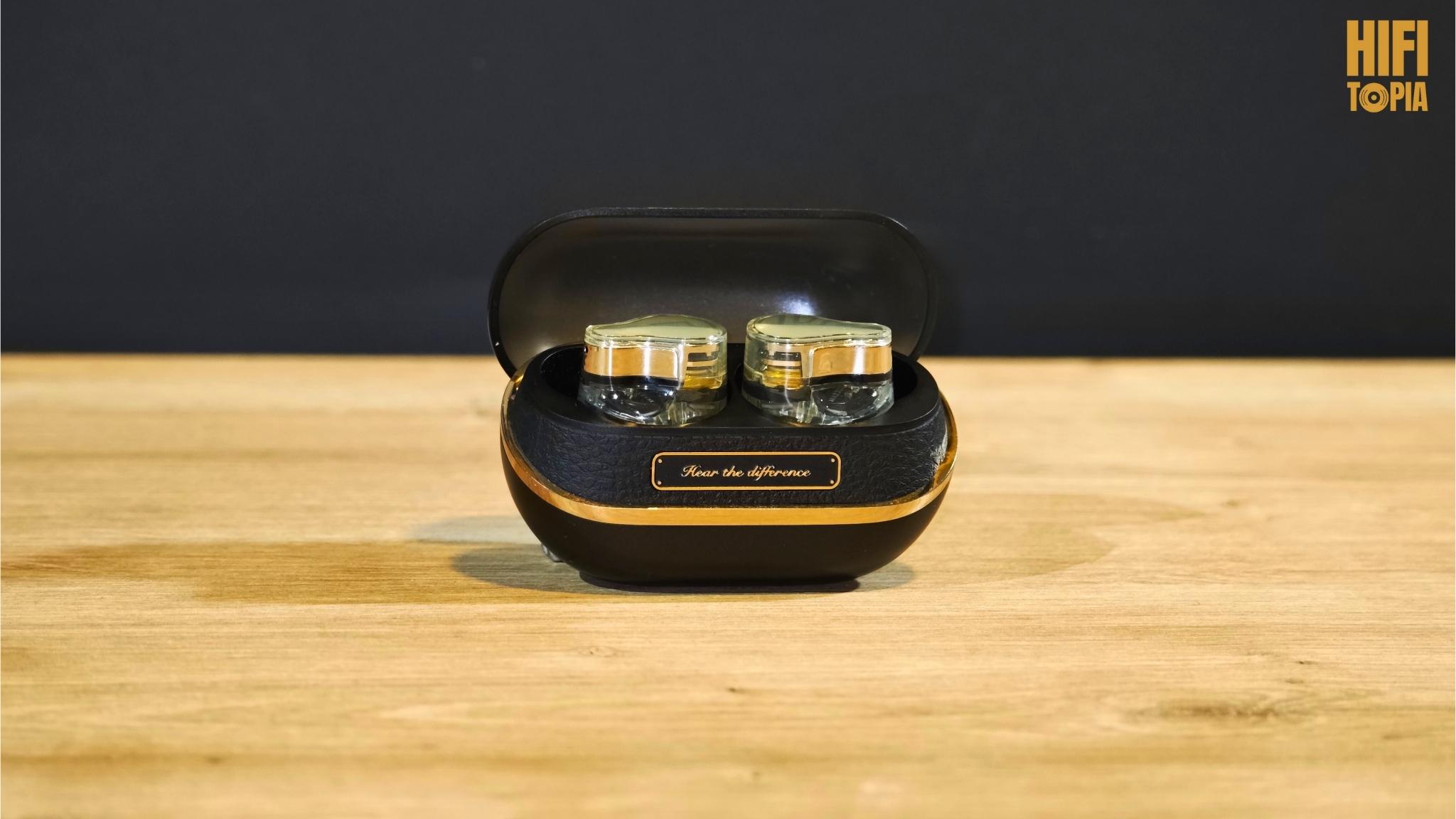
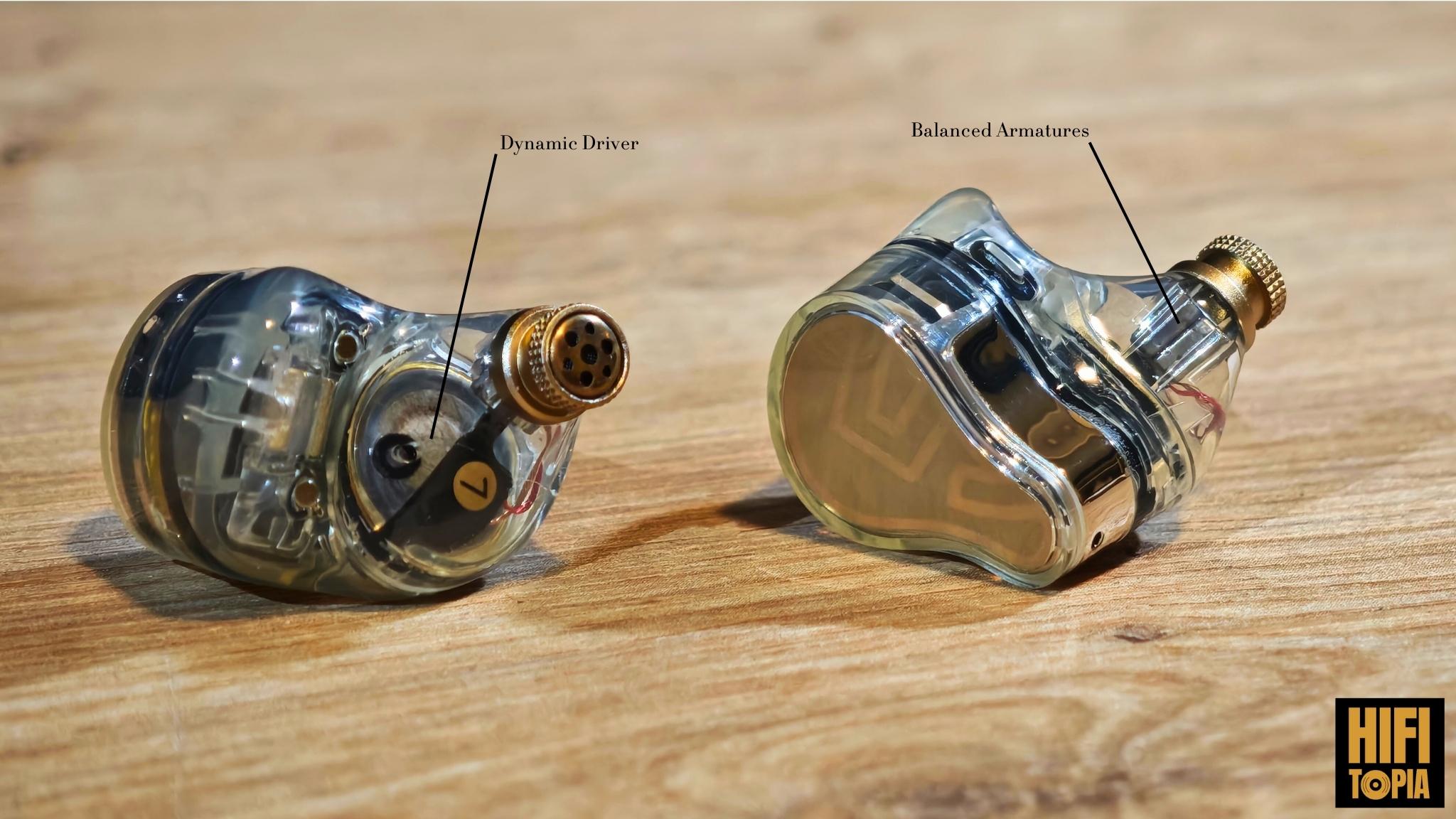
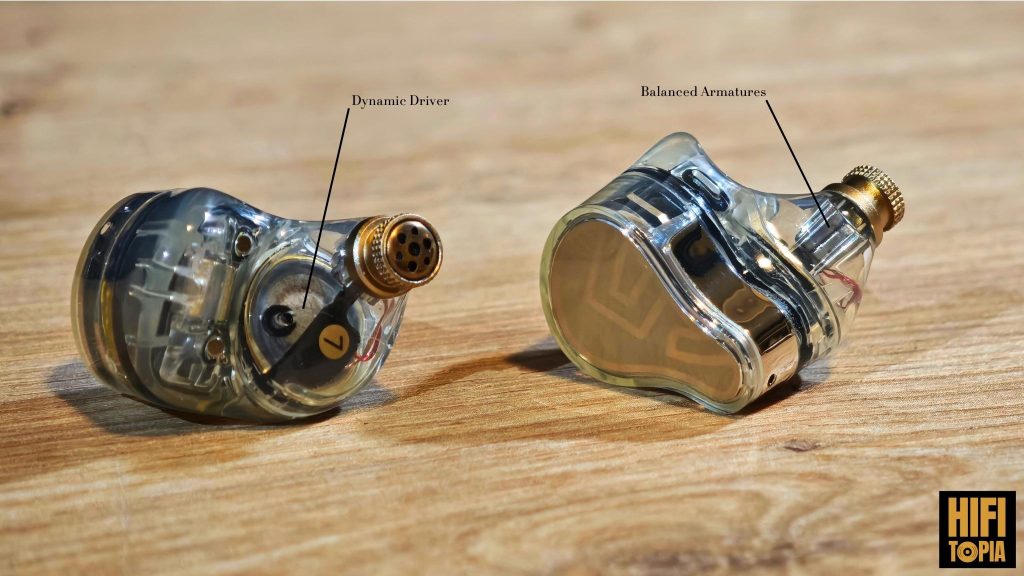
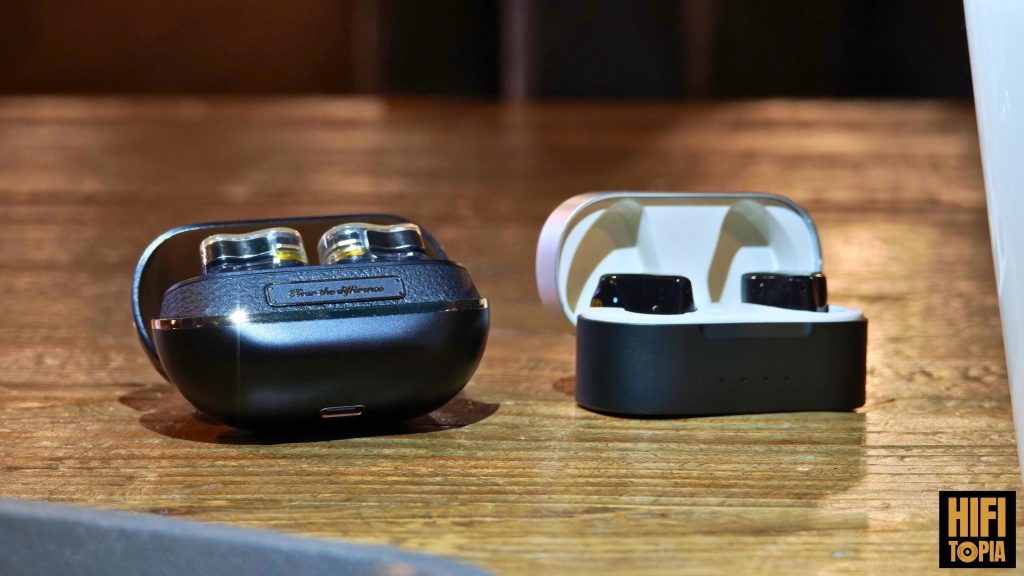
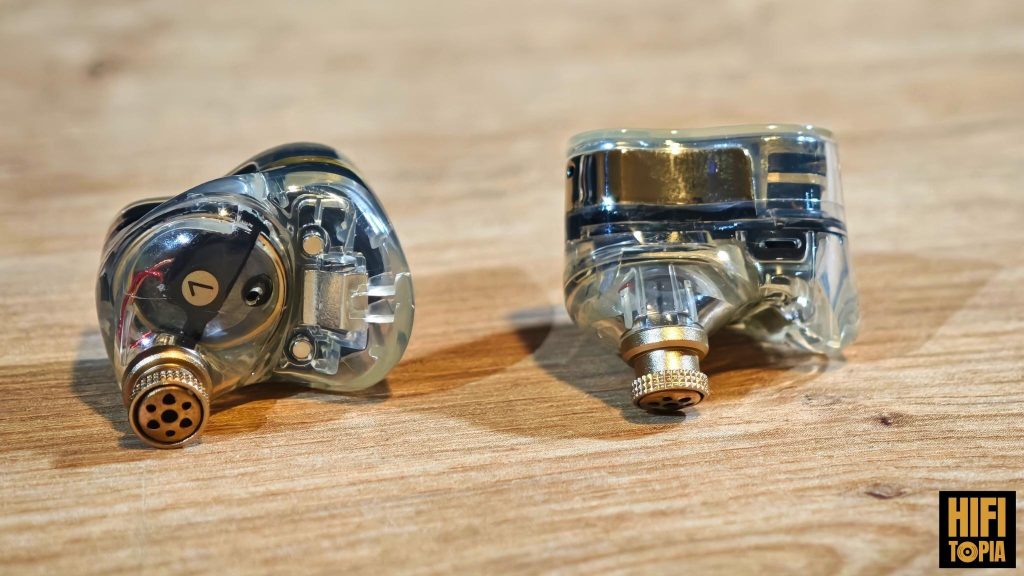
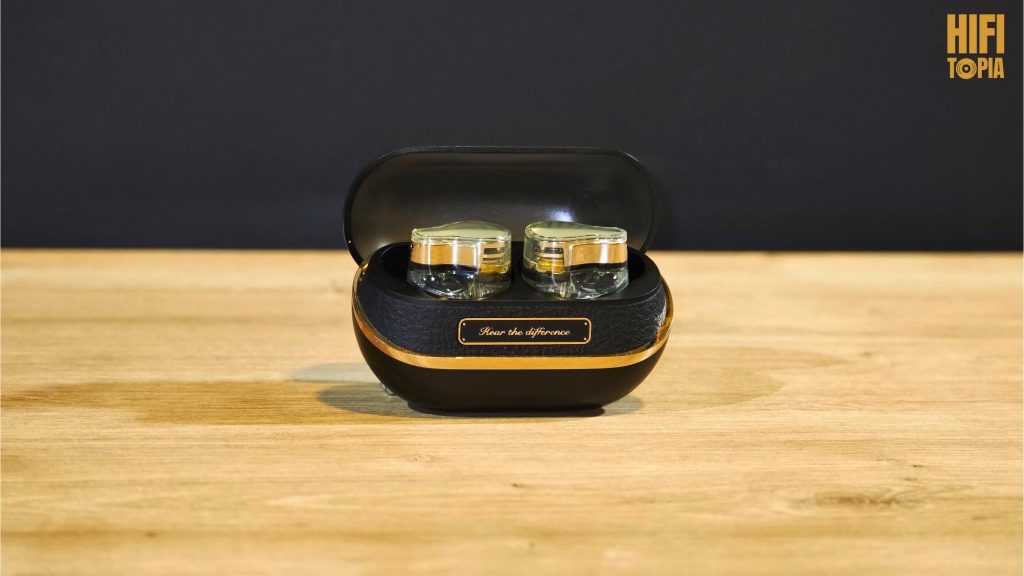
The shape of the shells is amazing. They look very stylish. Both the drivers and the circuit board (side view) are visible from the outside. What’s more, the classic IEM style ergonomic design of the shells is fantastic. When I look at the nozzles, I see metal ends with a serrated structure. The length and width of the nozzles are quite ideal. The shells fit the ear very well. Charging case has “hear the difference” written on it. This is both a nod to audiophiles and a great slogan for headphones. Apart from that, the charging case is oval-shaped, semi-transparent, and a bit large. The pairing button is located on the back. However, the charging case is entirely plastic.
Technology
The Soundpeats H3 features Bluetooth 5.4 and supports codecs such as LDAC, aptX Lossless, and LC3. It has a 12mm dynamic driver and two balanced armature drivers, with a frequency range of 20Hz-40kHz. The H3 earbuds offer up to 7 hours of battery life, and up to 37 hours with the charging case. The H3 also has all the modes you would expect in a TWS, such as ANC, ambient, and gaming mode. Plus, it has great app support.
Soundpeats H3’s ANC & Transparency Mode
Soundpeats H3 features active noise cancellation that cuts out background and road noise on the subway and bus, eliminates humming, and isolates you somewhat from the crowd. However, this ANC is not effective at cutting out speech sounds and loud noises above a certain level. The H3 offers average ANC for its price tag. The good part is that when combined with the passive isolation provided by the ANC shell design, it gives you sufficient silence. The same applies to the transparency mode, but I found it sufficiently effective for talking to people while playing light music. By the way, when ANC is on, it hardly affects your music at all, which is a good thing.
App
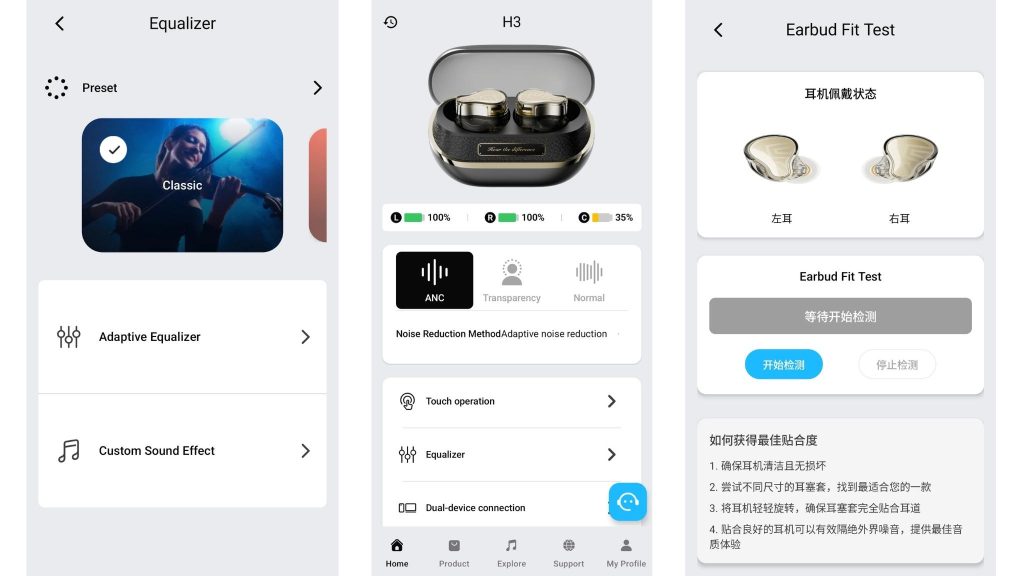
App support is where Soundpeats deserves praise. It’s simple, useful, and has everything you need. You can easily access all settings from within the app. You can perform version updates and manage touch features from here. In addition, there are extra features like dual connection, fit test, and find earbuds. You can see where your H3 is on the map. This is really solid, folks. On top of that, there are three awesome EQ options, so let’s take a closer look at that.
EQ
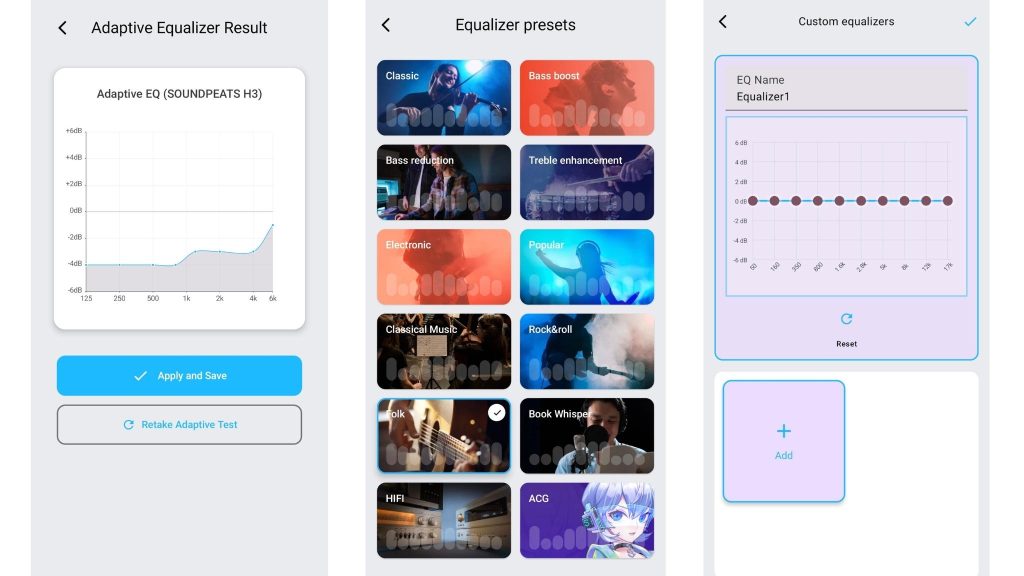
First, there are some preset EQ options here. Among these, I liked the Rock & Roll and Popular options. H3 comes with the classic mode by default. Moving past this section, we are greeted by a standard 10-band EQ. It’s quite sufficient, but since we audiophiles are a bit EQ-averse (except for the presets), I didn’t spend much time in this section.
And now for the real bombshell: the adaptive equalizer. Man, this thing works wonders. On my third try, it produced a sound profile that sounded amazing to my ears, and I really liked it. I recommend the adaptive EQ to everyone who gets the H3.
Mic
There are no problems relaying conversations in closed spaces. Outdoors, however, it picks up external noise along with your voice, which can interfere with your conversation in very noisy environments. I was able to communicate without any problems when talking while riding my scooter. It doesn’t relay your voice with perfect clarity, but it is perfectly understandable. We can say that the H3’s overall microphone performance is average.
Soundpeats H3 VS BGVP Q3
A quick comparison. First off, the Soundpeats H3 has great app support and decent ANC. These are not found on the BGVP Q3. What’s more, the H3 supports all the codecs supported by the Q3. The only advantage the Q3 has here is that it also offers a wired usage option with mmcx connectors. When evaluating sound quality based on wireless performance, the sound values are close, but the H3 leads in bass, balance, consistency, separation, and overall technical aspects. In terms of soundstage width and treble, Q3 is ahead. It’s clear that H3 uses a smoother amplifier because Q3’s drivers are quite smooth. I can easily see this when I use Q3 wired. H3 also wins in terms of charging time and overall usability.
Sound
The Soundpeats H3 has a sound profile that falls between V-shape and U-shape, but leans closer to V. Tonally, it has a slightly warm and dynamic sound. In its default state, it has a fairly ordinary sound that you could hear anywhere. After three attempts with adaptive EQ, the sound I got was relatively calmer and more neutral, offering more midrange focus despite having less energy. As someone who generally doesn’t recommend EQ, I strongly suggest using the preset EQ settings and adaptive EQ feature on this device.
Bass
The low frequencies are quite deep and layered, and extremely loud. They can be intense without getting too close to the surface and have a woofer feel. The 12mm DD does a good job here. With EQ support, it has the potential to satisfy bassheads. On the instrumental side, the bass guitar is great, the drums can sometimes be a bit too dominant, but the overall sense of amplitude is nice.
Mid
The midrange is quite clear and airy around the vocals, while the instruments are average in default mode but quite comfortable and focused after adaptive EQ. Surprisingly, guitars and wind instruments sound fantastic in acoustic tracks. The overall layering is good in this area, with the tonality well-balanced from neutral to warm.
Treble
The treble is airy and slightly sparkling but not overly bright, the air frequencies are clear, and the decay is within natural limits. Looking at the internal balance, the lower frequencies formed by the highest vocals are at a similar level to the upper treble. The cymbals are audible one by one, which is sufficient for a TWS. The treble body is slightly lacking, and the texture is quite standard.
Technique
The Soundpeats H3 offers good resolution and excellent detail capture for its price. Texture is average, but its imaging capability is quite good. The soundstage width and depth are decent, and it’s well-positioned for its price. The layering and separation are also good for the price. While the technical distribution is close to homogeneous, it has a stronger technique towards the higher frequencies, though this is not a major difference. The H3 produces an isobaric frequency response from loud to soft and does not distort at high volumes. Beyond that, the timbre accuracy is excellent for the price.
Last Words
The Soundpeats H3 is a very impressive TWS earbud for its price, both in terms of sound quality and features. Of course, it’s not perfect, but considering the price tag, it doesn’t have to be. We can confidently say it’s one of the best wireless in-ear headphones you can get in this price range. Let’s see what the company’s next product for audiophiles will be like.