Charging method: charging cabin, MMCX
Battery life: 7h Bluetooth earphones, 28 hours for the charging compartment, unlimited battery life for mmcx
Bluetooth chip: QCC3072
Bluetooth version: 5.3
Impedance: 38Ω
Sensitivity: 102dB SPL/mW
Frequency response range: 20Hz-40kHz
Channel difference: ±1dB
Distortion rate: 1%
Rated power: 179mV
Bluetooth distance: 10-20 meters
Operation mode: touch
Headphone weight: 6.3 (single earphone)
Drive unit: PEI moving DD + phionex BA
Supported protocols: APTX Adaptive/LE Audio/AAC/SBC/A2DP/AVRCP/HFP/HSP/SPP/PBAP
Cavity material: 3D printing
Wearing type: in-ear
Waterproof level: IPX4 (daily waterproof, not into the water)
Total Score
Introduction
Greetings to all of you in the first month of the new year. Today, we’re bringing a concept to life that we haven’t done in a long time. Here it is: a wireless headset, the BGVP Q3 review!
Have you been missing wireless products? Let’s see if the BGVP Q3 can satisfy that craving.
I purchased the product myself and used it for about 140 hours before starting to write this review.
Design & Build
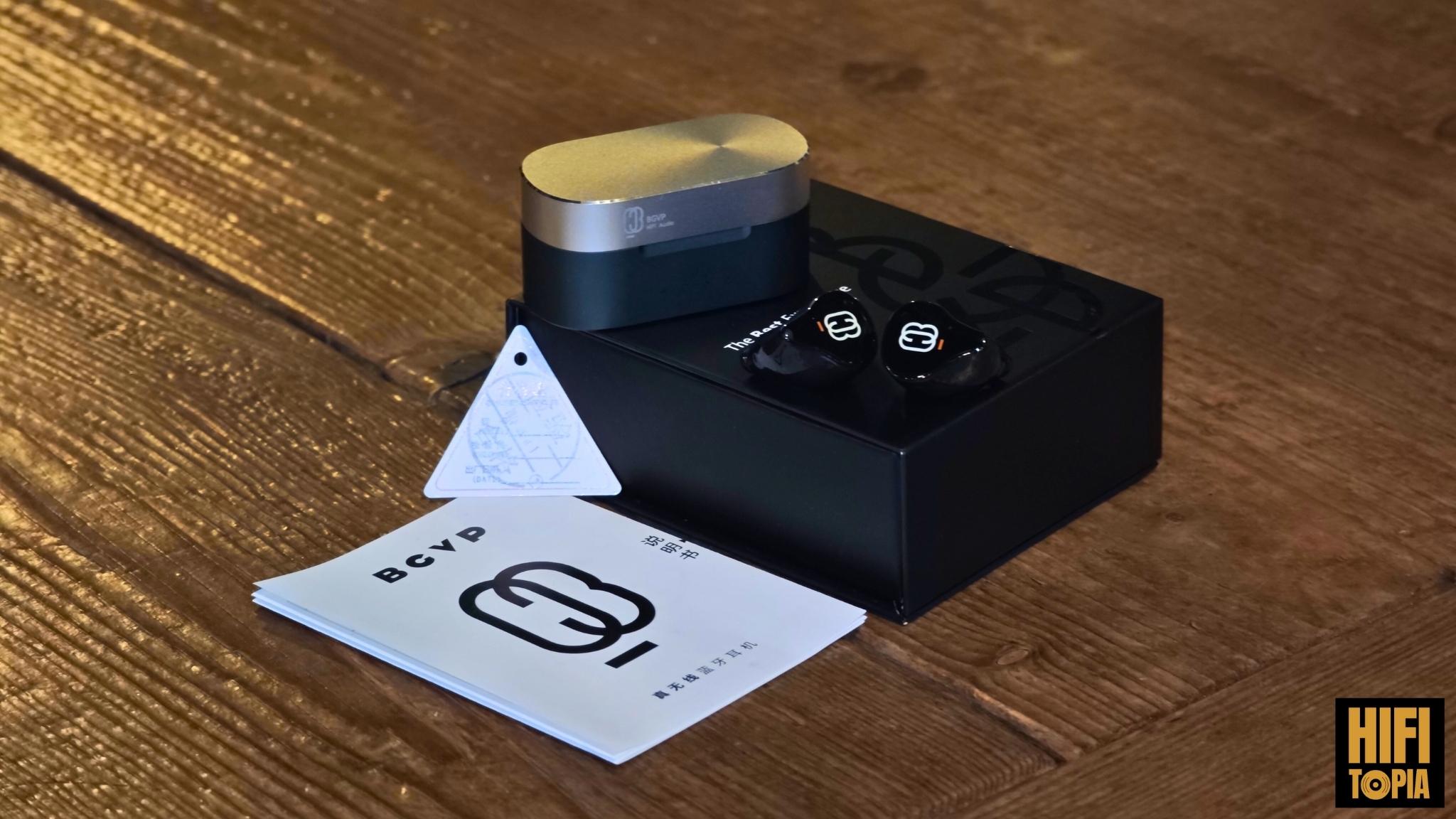
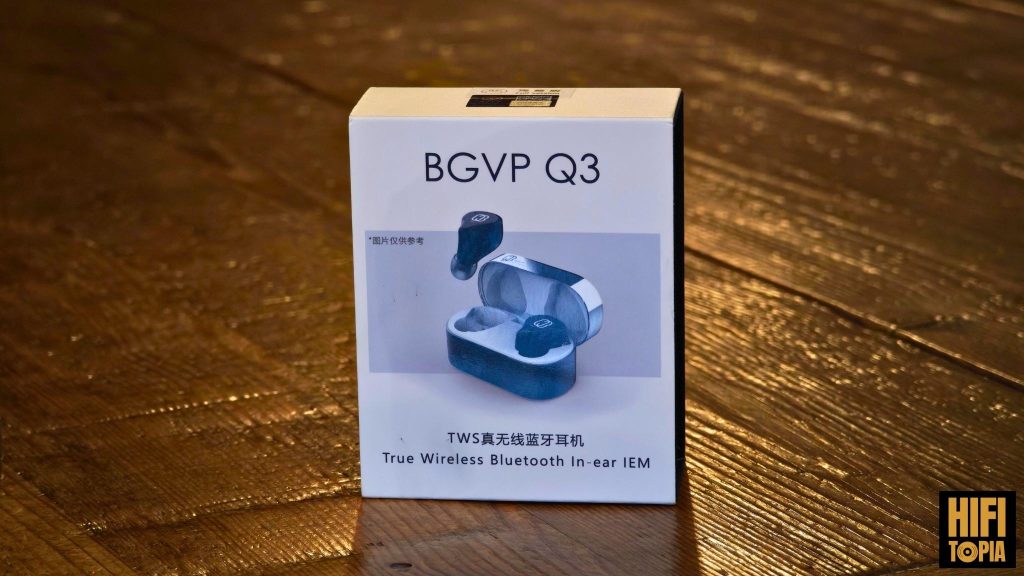
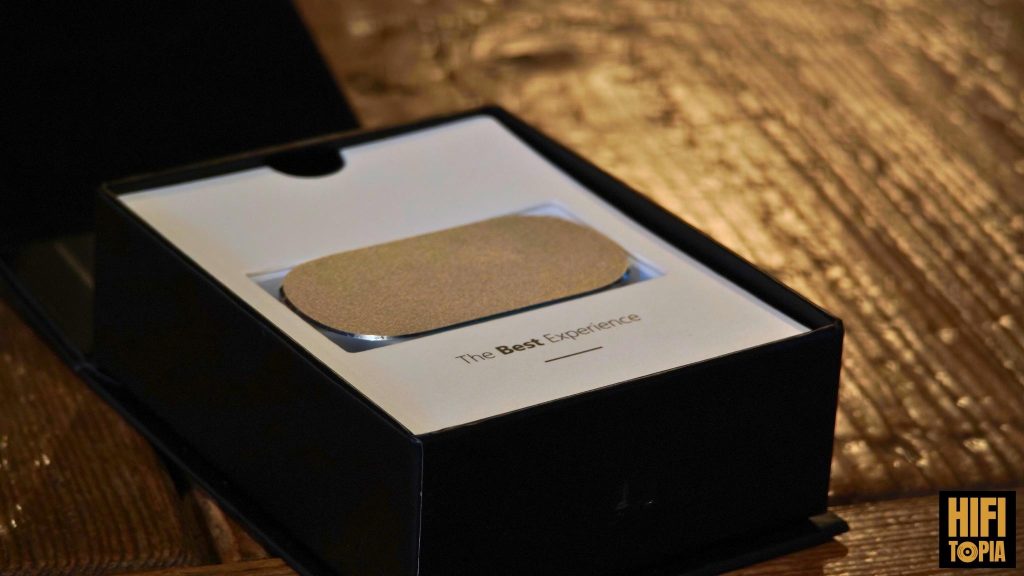
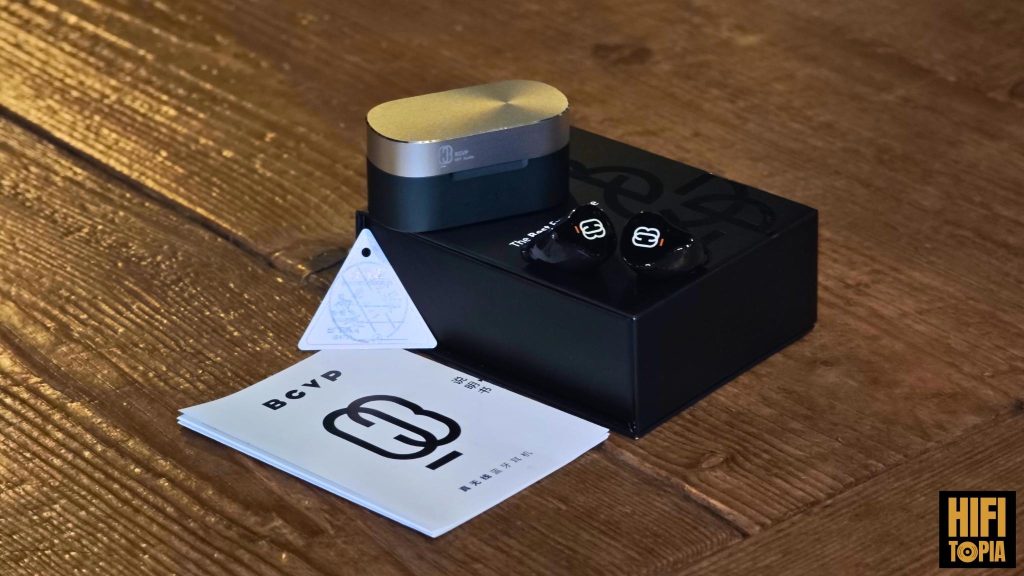
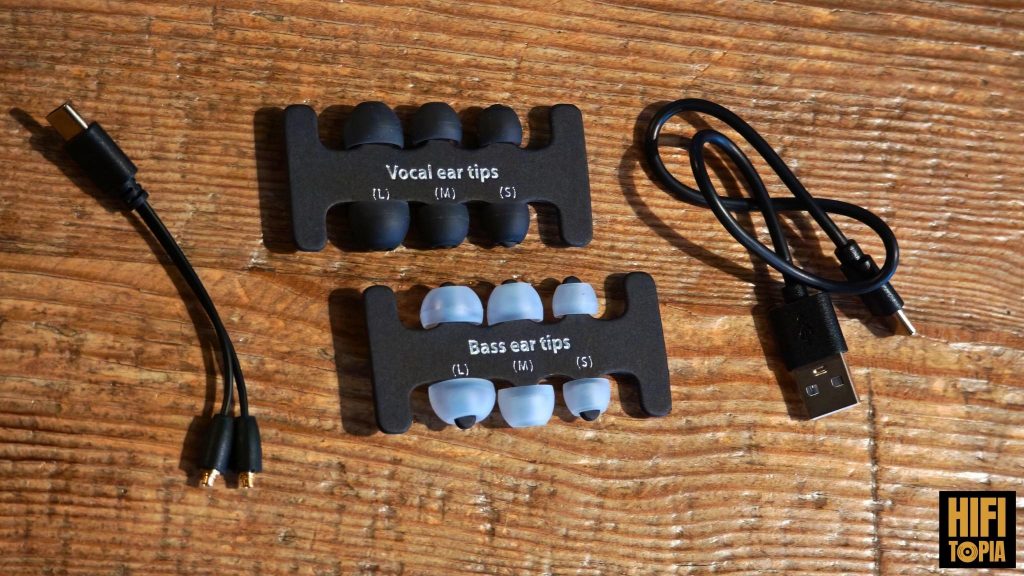
The Bgvp Q3 comes in a very compact box. In addition to the items we are used to seeing in such boxes, there is a cable we are not used to seeing. Here is the complete box contents:
- Case & Shells
- Type C Cable
- Type C to MMCX cable!
- 3 size 2 type tips
- Papers
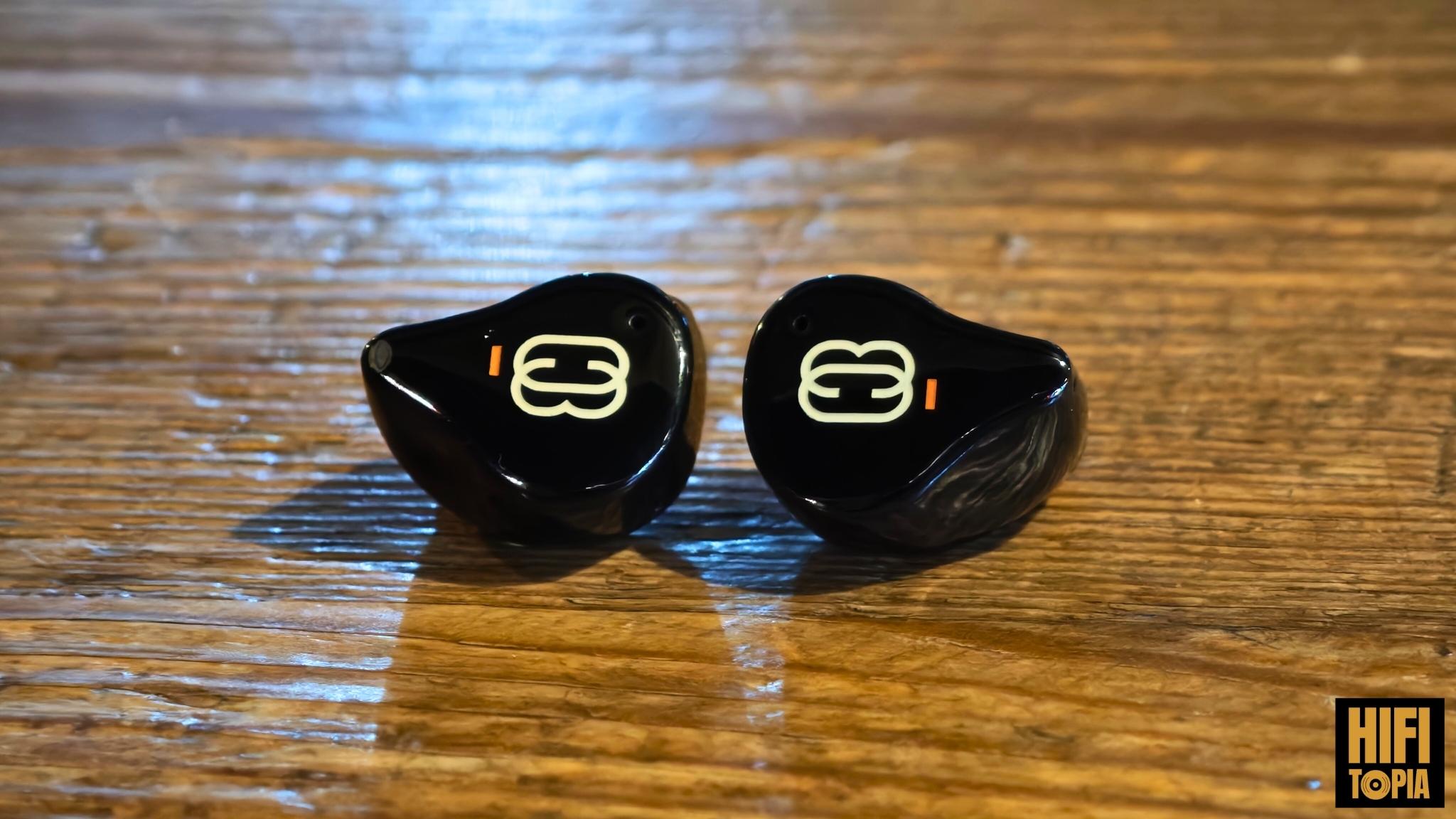
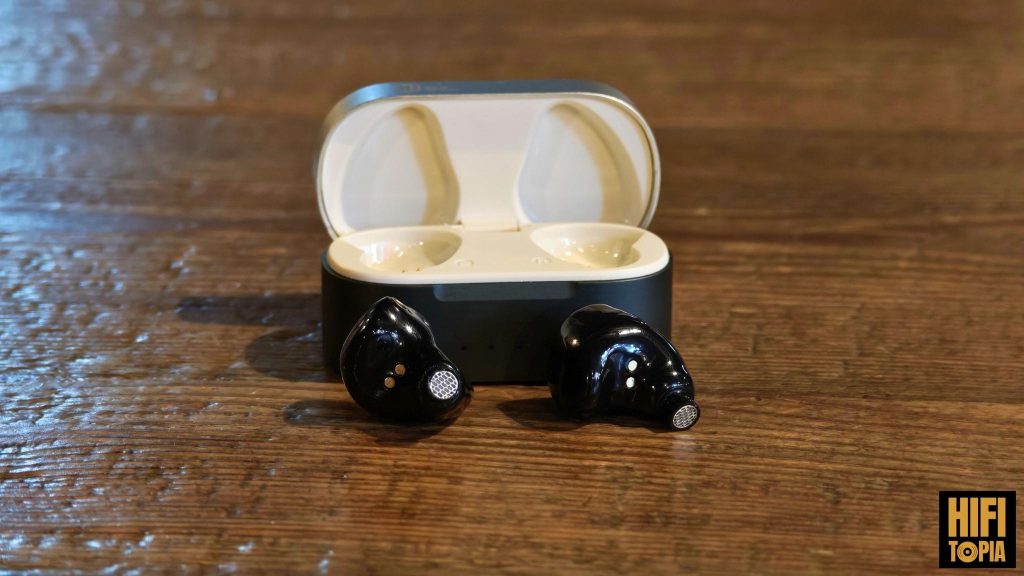
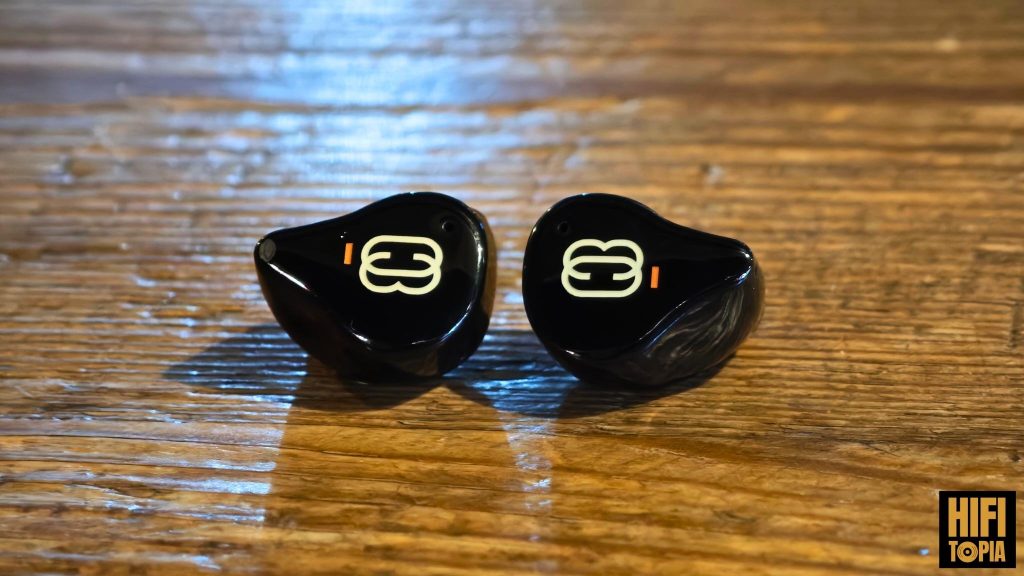
The charging case is quite compact and has a sleek appearance. The exterior is metal, while the interior is polymer, and the hinge feels not very sturdy. The ear tips are made of resin and fit perfectly in the ear. The isolation is quite successful. (This is a must because there is no ANC). The ear tips feature microphone holes, tiny LEDs, and MMCX connector ports. You can use the BGVP Q3 either wired or wirelessly.
You can charge the earpieces via MMCX using the Type-C to MMCX cable included in the box. It’s a promising feature, but I can’t help but wonder, what’s the point? They could have just included a cheap MMCX to 3.5mm cable in the box instead. It feels like someone on the R&D team said, “Hey, I can do this!” and they just threw it in without thinking.
Technology
First of all, I couldn’t find any apps for the Q3. This is a serious shortcoming. Ignoring this, the lack of ANC makes things worse. So what do we have? The BGVP Q3 is a Bluetooth 5.3 TWS headset with additional MMCX connectors for wired use. It uses the Qualcomm QCC3072 Bluetooth chip and supports the following protocols: aptX Adaptive/LE Audio/AAC/SBC/A2DP/AVRCP/HFP/HSP/SPP/PBAP. The Bluetooth connection is strong and stable, with no interference noise. Here’s the dilemma: for a TWS that supports such high-quality codecs, how appropriate is the wired usage option? I’ll leave the answer up to you.
With A Wire?
I wanted to try the BGVP Q3 wired as well. For a plausible scenario, I used an average mmcx cable and a $10 ESS-chip dongle. The result? Yes, the sound is quite nice. But what’s the point? If that’s the case, why did you make this device wireless? You made it, but instead of adding a crappy mmcx cable to the box, you put in an mmcx charging cable? Really? Look, folks, the product isn’t bad, but I really don’t know what you’re going to use these features for. So instead of all these gimmicky features, if you had just put a decent amplifier and the cheapest DAC chip inside this device, you would have blown everyone away. See: Hifiman Svanar Le
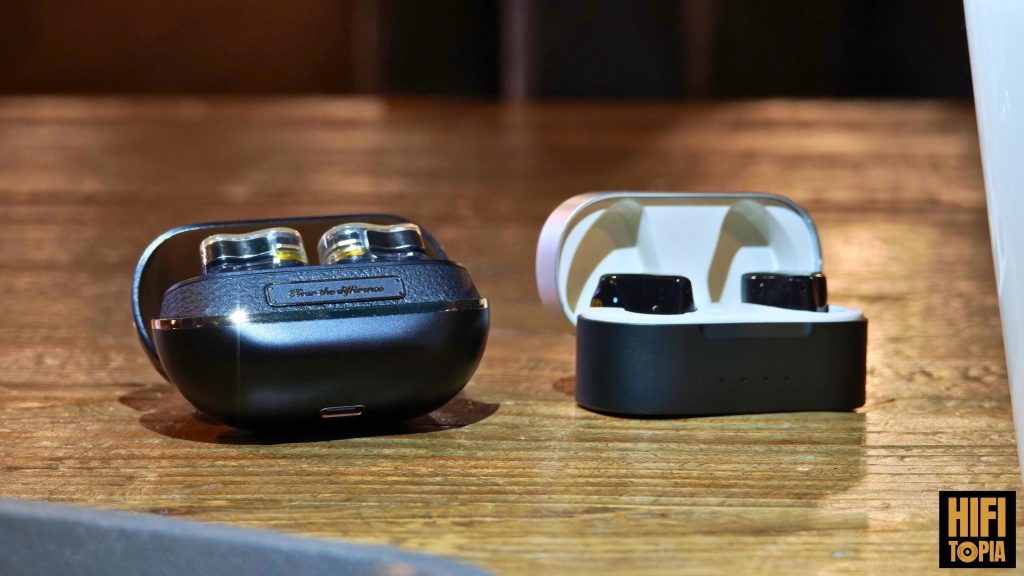
BGVP Q3 vs Soundpeats H3
A quick comparison. First off, the Soundpeats H3 has great app support and decent ANC. These are not found on the BGVP Q3. What’s more, the H3 supports all the codecs supported by the Q3. The only advantage the Q3 has here is that it also offers a wired usage option with mmcx connectors. When evaluating sound quality based on wireless performance, the sound values are close, but the H3 leads in bass, balance, consistency, separation, and overall technical aspects. In terms of soundstage width and treble, Q3 is ahead. It’s clear that H3 uses a smoother amplifier because Q3’s drivers are quite smooth. I can easily see this when I use Q3 wired. H3 also wins in terms of charging time and overall usability.
Sound
The Bgvp Q3 has a simple V-shaped tone. The low frequencies are rich but slightly diffuse, while the high frequencies are energetic and precise. The mids are good for vocals but quite ordinary for instruments. Technically speaking, the resolution is adequate, but the details could be richer. The staging is nice for such a device. It’s sufficiently airy and the positioning is partially correct. It’s quite sufficient for the general use case scenario of listening to upbeat tracks while exercising. Despite being V-shaped, I think it’s sufficiently balanced; it will save the day when you occasionally want to play instrumental stuff, but it’s far from satisfying an audiophile. Still, I consider it a well-intentioned effort. The Q3 has a semi-isobaric frequency response but lacks a bit of homogeneity. The highs are nice, but the bass is present even where it shouldn’t be. This is an issue, but it won’t bother those who listen to hip-hop, pop, or EDM genres.
Last Words
The BGVP Q3 is a TWS that stands out with its unique style and features, but it has too many shortcomings. All this makes it average, we could say. If you already have an MMCX setup and are looking for something to use for sports, you could give it a try.