32 Ω
Weight
10 g (single earphone)
Frequency Response
20 Hz – 20 kHz
Sensitivity
103 ± 3 dB
Magnetic Circuit System
single magnet & dual-cavity
Chamber Material
zinc alloy & green sandalwood
Driver
10.0 mm flat glass diaphragm driver
Total Score
Introduction
Hello to all Hifitopia readers on these first sunny days of spring. Today, we’ll be taking a look at a fantastic IEM that stands out for its price-to-performance ratio and its tuning, which exceeds expectations for its price range. I’m here to share my review of the Sivga Que Utg, which delivers satisfying results in many areas and is surprisingly successful in its overall performance.
Let’s see just how far this IEM, costing under $100, can go. How does the sound hold up alongside its fantastic design?
The product I have here was sent to me by Sivga for an independent and honest review. I’d like to thank Sivga for their support of independent reviewing and for adhering to our principles of integrity. Before writing this review, I spent nearly 150 hours with the Sivga Que UTG (excluding burn-in).
Design & Build
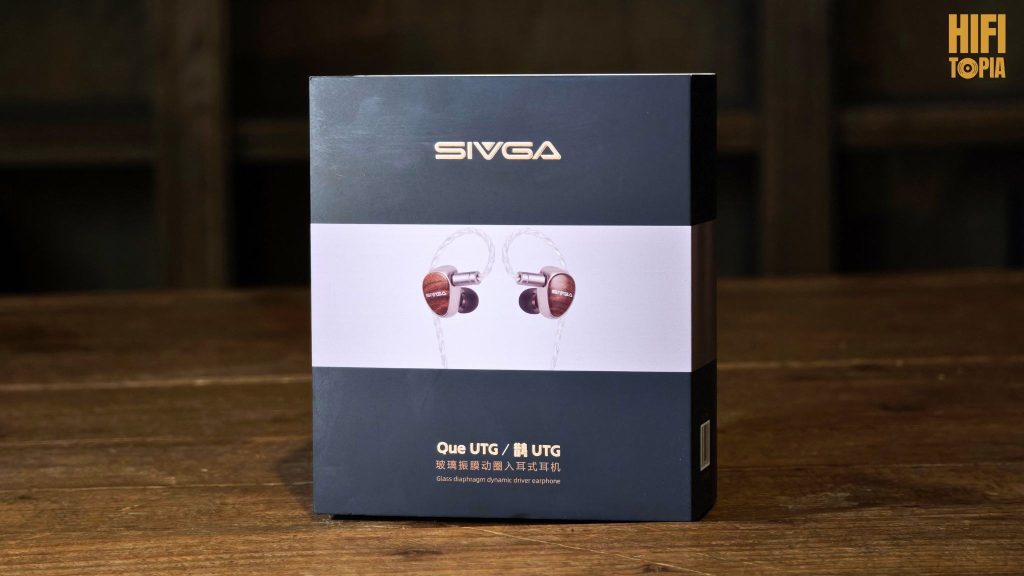
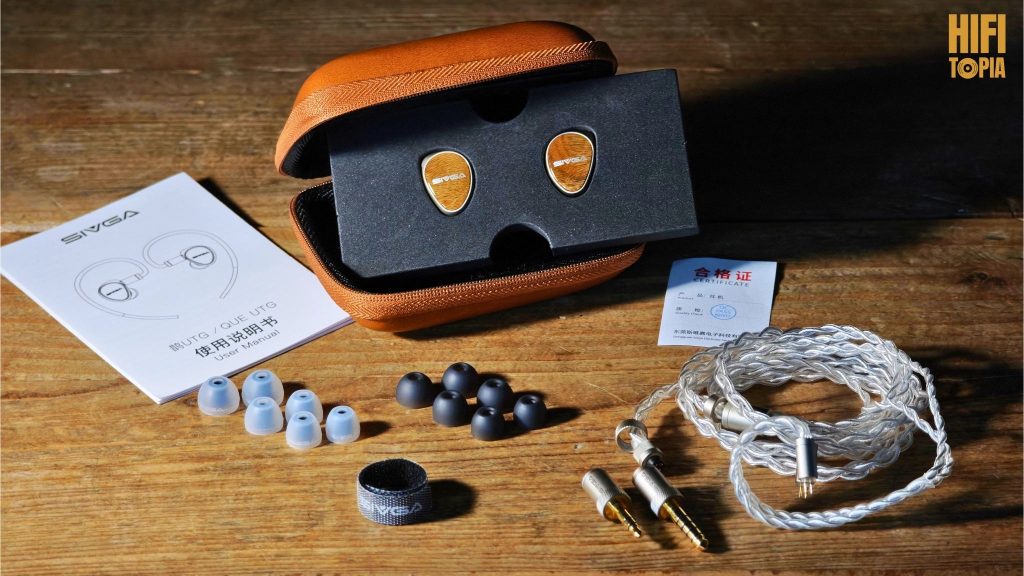
They’ve really gone all out. Sivga has put a lot of care into this product; perhaps because it’s a sort of continuation of the Que series, I could see some of that experience reflected here. The overall build quality and craftsmanship are excellent. The selected accessories look both high-quality and well-matched. The design quality far exceeds what I’d expect in this price range. Here’s the complete list of what’s included in the box:
- Que UTG earphone: 1pc
- Real Leather Case: 1pc
- 3.5mm – 4.4mm cable
- S Ear Tip: 2 pairs
- M Ear Tip: 2 pairs
- L Ear Tip: 2 pairs
- User Manual
Shells & Cable
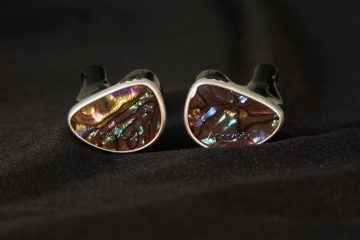
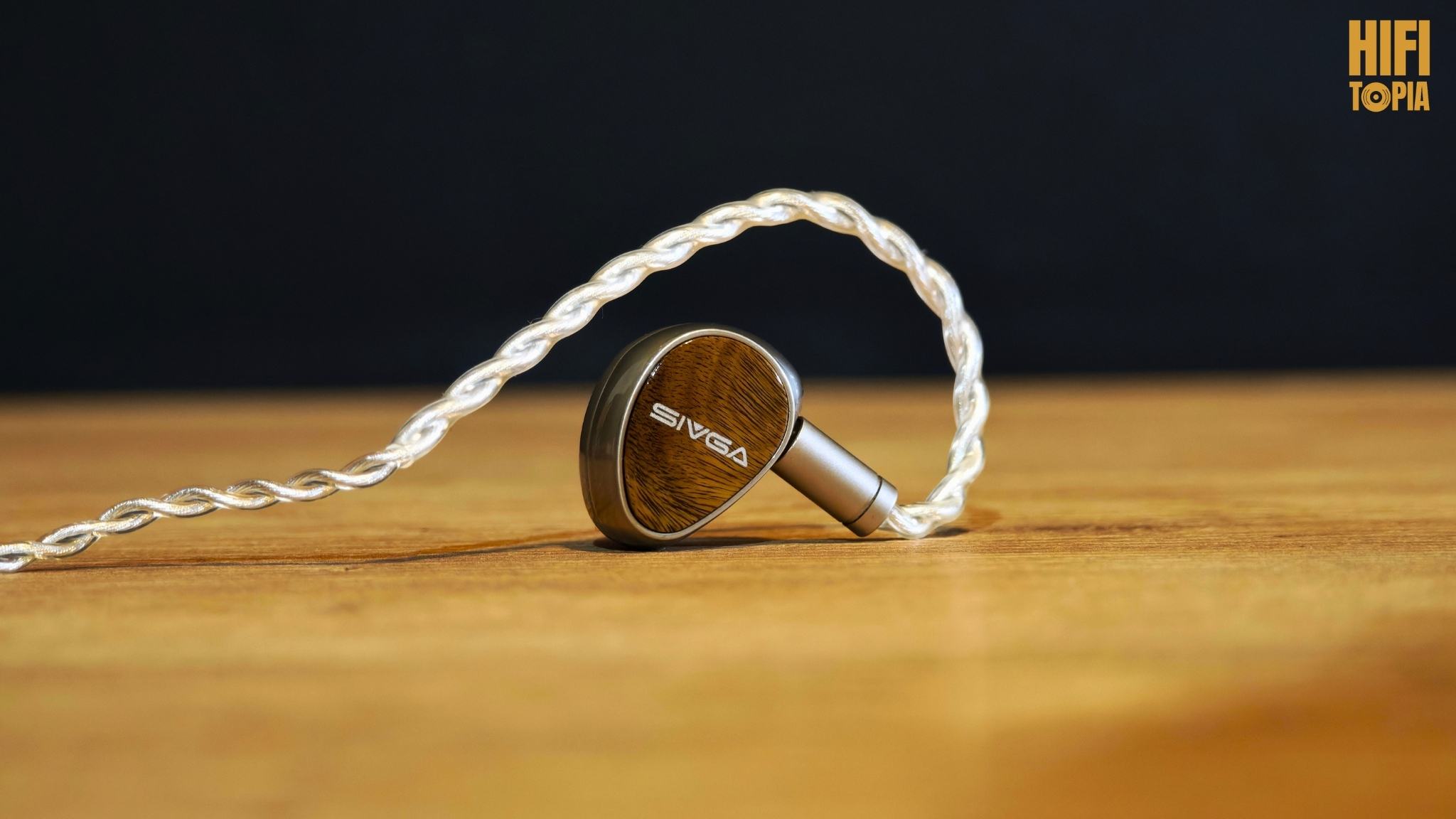
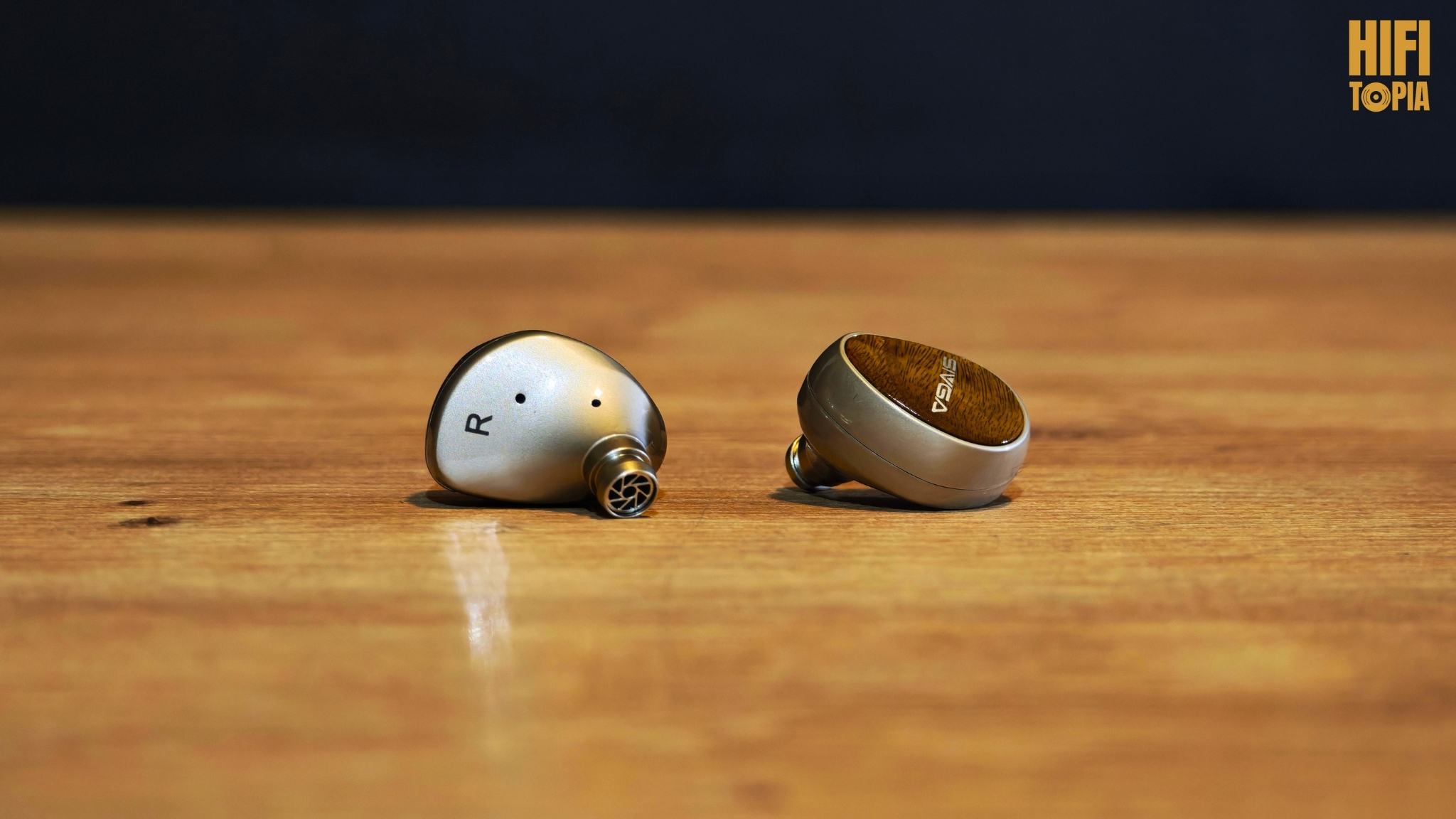
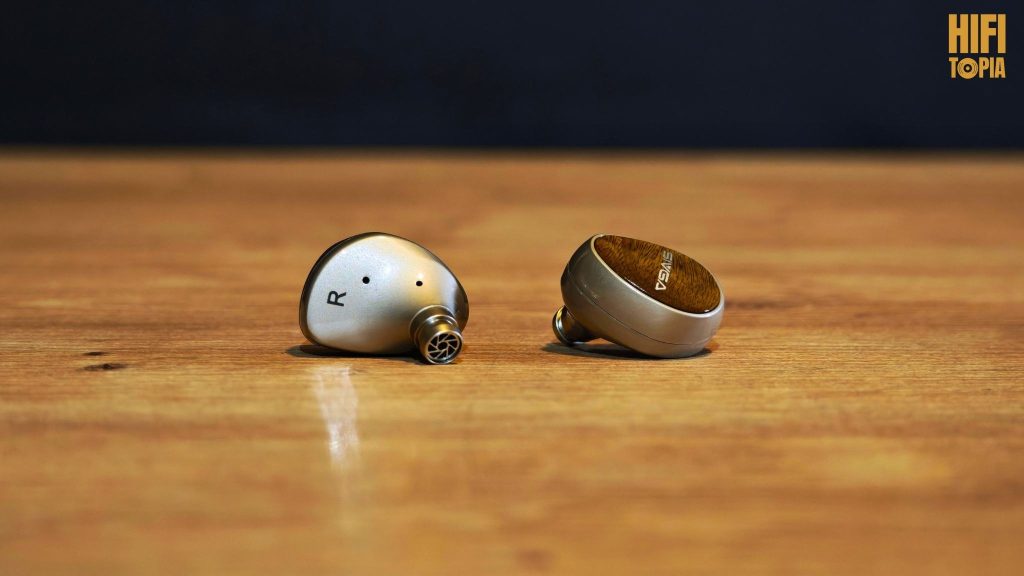
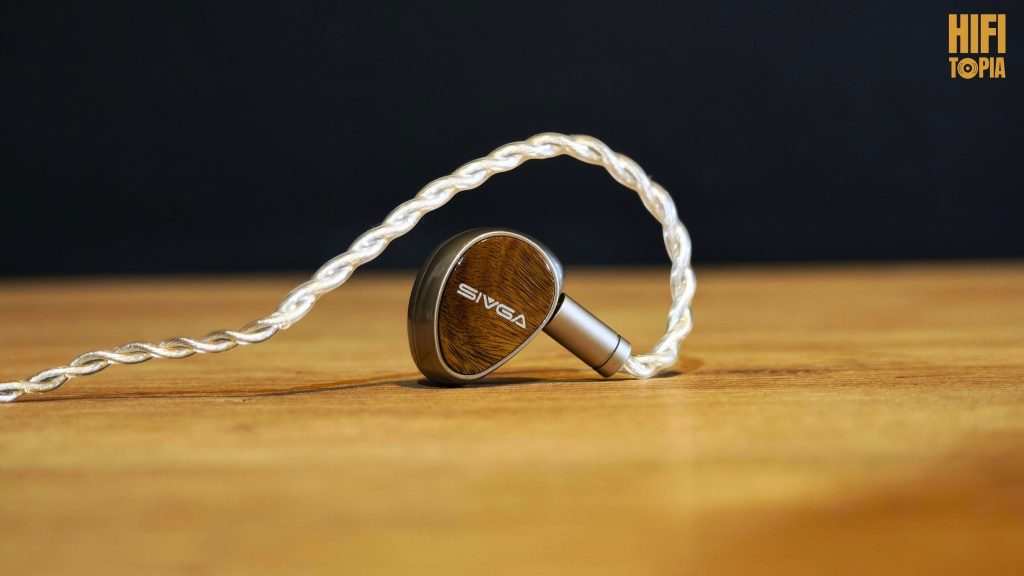
The Sivga Que UTG’s shells have a ceramic-like finish over a zinc-based metal structure and feature wooden faceplates. The nozzle size and length are within the ideal range, and a nice pattern has been chosen for the nozzle tip. A pair of dot-shaped vents are located on the inside of the shells. The overall fit of the shells is quite good, and the insulation is acceptable. The craftsmanship of the housings is truly top-notch.
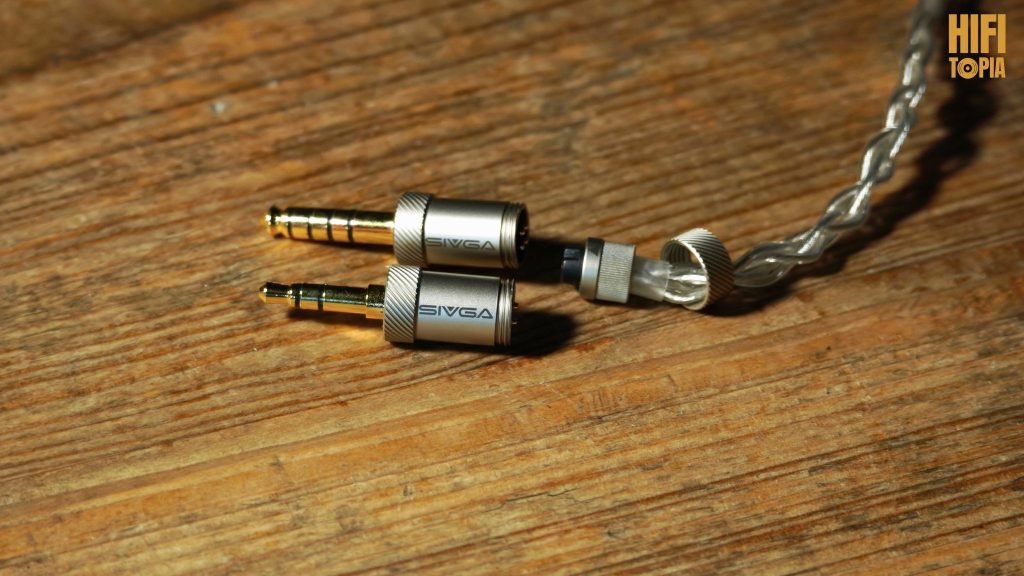
Sivga has maintained the same quality in the cable as well. It features a 4-core structure made from 7 strands of OFC-SPC material. The jack is exactly what we wanted to see. It has a screw-on system as it should, and the jack isn’t too long. Generally, in this price range, we see jacks that are quite long and awkwardly sized. Sivga has gone above and beyond and used a wonderful replaceable jack mechanism.
Tips & Case
Two types of tips are included, each in three sizes. They’re actually quite standard but high-quality tips. What I want to highlight here is the Sivga logo on the base of the tips. This demonstrates both attention to detail and a commitment to the product. Seeing this in this price range really earned my respect.
Similarly, the included hard case has a standard appearance but is made from extremely high-quality materials. The craftsmanship is flawless, and it functions perfectly. I wouldn’t be surprised if this same case came with a more expensive IEM.
Synergy
The Sivga Que UTG has a fairly neutral tone and an organic frequency response compared to the general preference within its price range. In this regard, it offers a sound that can be tailored to the desired tone (such as warm or mid-centric with a vocal focus) based on the source characteristics. For this reason, I believe that synergy with the source is very important for this IEM.
Before giving examples of source pairings, here’s a mini-synergy sequence: I paired the Que UTG with two random “$10 dongles” I had on hand. The purpose of this pairing was twofold: to determine whether the Que UTG + ‘$10 dongle’ combination is a good choice within a $100 budget, and to see how well it performs without a source in everyday listening scenarios. I must say that the result was a homogeneous and detailed technical performance with a neutral response and a very comfortable tonal balance. In this regard, I would like to note that I view this approach favorably for the Que UTG within a limited budget.
Sivga Que UTG With Nicehck Octave
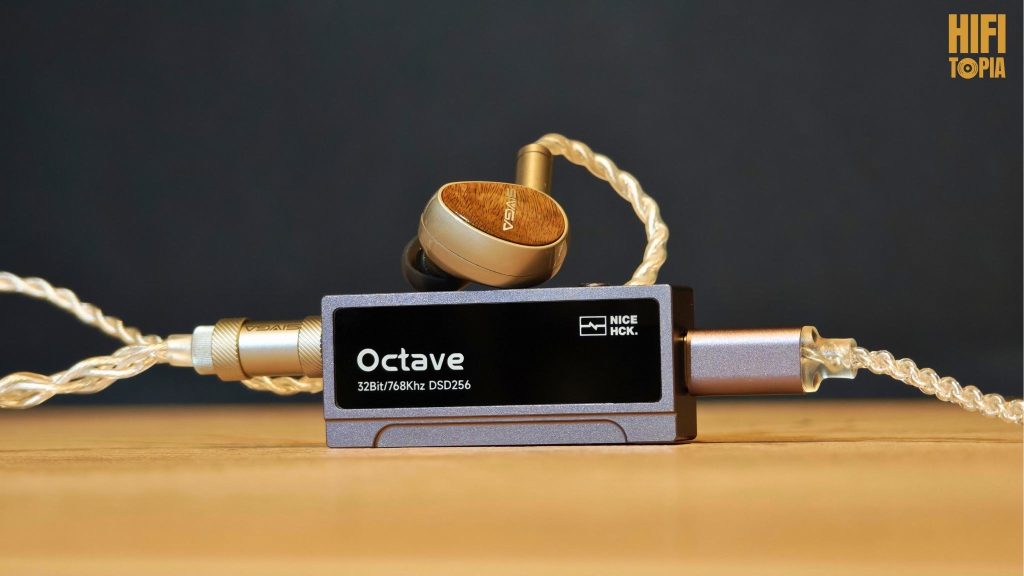
4.4mm, L gain, Slow-LL Filter
Priced under $100 and featuring neutral-sounding tones, it’s no surprise that these two devices pair together perfectly. The Nicehck Octave is a dongle that uses the new entry-level 9039 chip and has a sound profile to match. Additionally, since the Octave is supported by an app with built-in EQ, this pairing offers considerable tonal flexibility. Although I’m generally against EQ, I can’t deny the versatility it adds.
It has a very balanced tone—an incredibly consistent timbre for this price point. At the same time, the sound is detailed, textured, and high-resolution. The technical execution is homogeneously distributed. An excellent price-to-performance ratio. A very clear 9.9/10 pairing.
Sivga Que UTG With FiiO BTR7
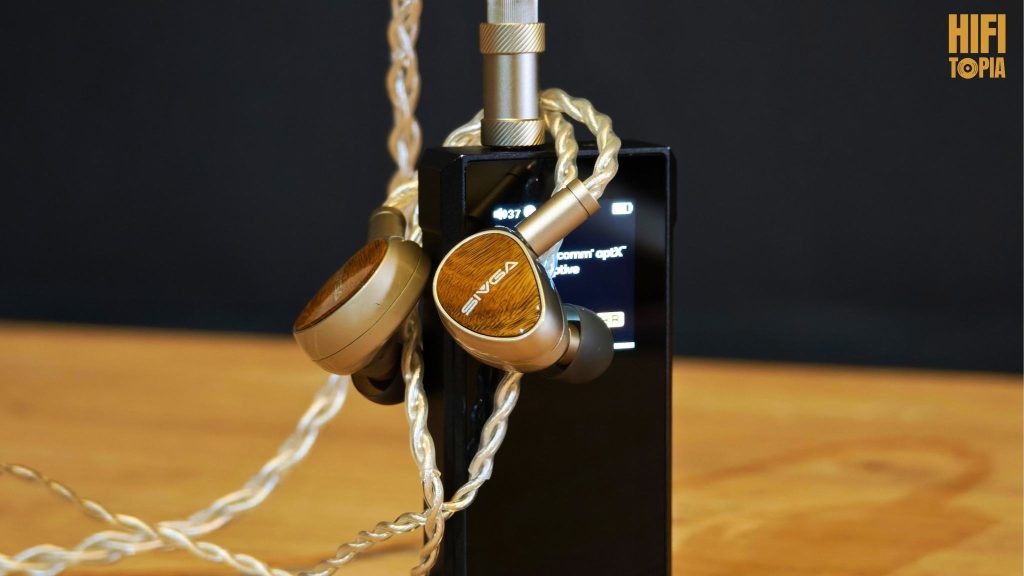
4.4mm, High Gain, Fast Filter
I really love the BTR7: even though it’s been years since its release, I still think it’s the best device in the BTR series. It really shows off its prowess here:
Compared to the previous pairing, it has a slightly warmer, more intimate, and fuller-bodied character. Technically excellent, but still nearly on par with the Octave. Here, the thick guitar strings are a bit more prominent. In terms of tone, this pairing retains a more analog-like quality compared to the previous one, yet it still stays on a similar neutral line. I’m deducting points here because the price has gone up. My rating for this matchup is 8.6/10.
Technology
“Technology” isn’t a section I usually include in my IEM reviews, but I’ve been seeing a lot of new developments lately. I won’t dwell on this too much:
Sivga Que UTG has opted for a flat glass diaphragm in its single dynamic driver. What I’m saying is, if this diaphragm technology is what’s behind the detailed, homogeneous, and neutral sound we’re getting, that’s fantastic. Because this IEM is truly solid. Frankly, I’ll be keeping this diaphragm type in mind from now on. Or is this our new “beryllium”? 🙂
Sound
As I mentioned in the “Synergy” section, the Sivga Que UTG has a neutral frequency response. It’s tonally balanced, stable, and the amplitudes are perfectly in place. It possesses both a balanced and natural tone. In this regard, I recommend bassheads to give it a try. This IEM is the perfect choice for hearing exceptional instruments at a reasonable price. Of course, it’s not entirely neutral; there’s a certain amount of U-shaped coloration. Still, for this price range, it’s very close to the neutral axis, and I consider that a plus.
Bass
The low frequencies are fast, with excellent drum-capturing ability. In terms of positioning, they’re slightly distant from the surface and reach a decent depth. They offer a satisfying amount of texture in the instrumental department.
Mid
The midrange remains neutral throughout, and you’ll hear some fantastic instruments here. It has the right contrast ratio and a shadow-free, unmasked, transparent midrange. In this regard, it’s quite satisfying. Plus, it handles multiple instruments quite well.
Treble
When it comes to the trebles, the Sivga Que UTG takes the reins with a subtle touch of color and the right amount of energy. For a single-driver IEM under $100, the highs are exceptionally clean, clear, crisp, and well-defined. The extension is within natural limits; the air frequencies are slightly behind the main high-frequency body in terms of intensity and positioned away from the center. For this price point, the high-frequency response is truly excellent.

Technique
What can I say? For this price, the technical quality is top-notch.
Good resolution, good detail, homogeneous distribution, good accuracy.
Separation is successful, and the layering is fantastic for this price. The soundstage is modest but accurate and well-defined: it has a width slightly above average and good depth. The positioning ability is excellent. The overall imaging is quite successful.
The amount of texture and spatiality is average. The overall technical capability, however, is well above average.
Last Words
The fact that entry-level devices sound this good can sometimes make you wonder about the equipment you’ve spent thousands of dollars on. Anyway, that’s a topic for another post.
The Sivga Que UTG has proven to be a highly successful and competitive IEM in every respect. It clearly exceeded my expectations. It deserves a spot on my list of recommendations. Until the next review, goodbye.