
– 4 Way Crossover
– Frequency response 20hz – 45khz
– Sensitivity 94db @100mV @1khz
– Impedence 22ohms @ 1khz
– DiVe Pass System for Dynamic Driver (Deep Controlled Bass with zero Dynamic Back vent Phase Cancellation)
– 3D AccuPost System (Proprietary Acoustic Chamber made to reproduce Accurate Sound Stage and positioning)
– Advanced Chamber Design
– Revolutionary Pentaconn Ear Plug Connector (Developed by NDICS Japan)
– High Quality Internal Wiring from JAPAN
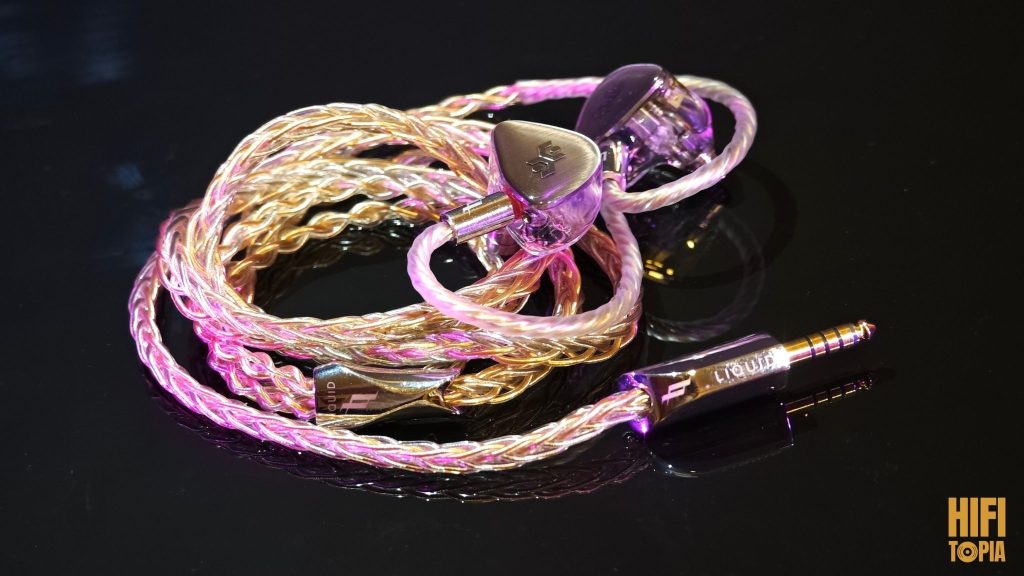
– Liquid Links MARTINI bundled cable (Silver Palladium + Copper Gold)
Total Score
Introduction
Hello to all Hifitopia readers from the moment this long-overdue review was finally started!
In this review, I’ll describe that product you’ve all heard so much about down to the finest detail. Here it is: the Elysian Acoustic Labs Annihilator 2023.
I didn’t expect this review to take this long to come out either. But hey look, here we are! Here is the Annihilator review!
The unit I have here is the one I’ve been using personally, and I’ve been listening to the Annihilator for two years now. During this time, I’ve had my hands on quite a few Annihilator 2023 units.
Are you ready to read the most detailed Annihilator review you’ve ever seen?
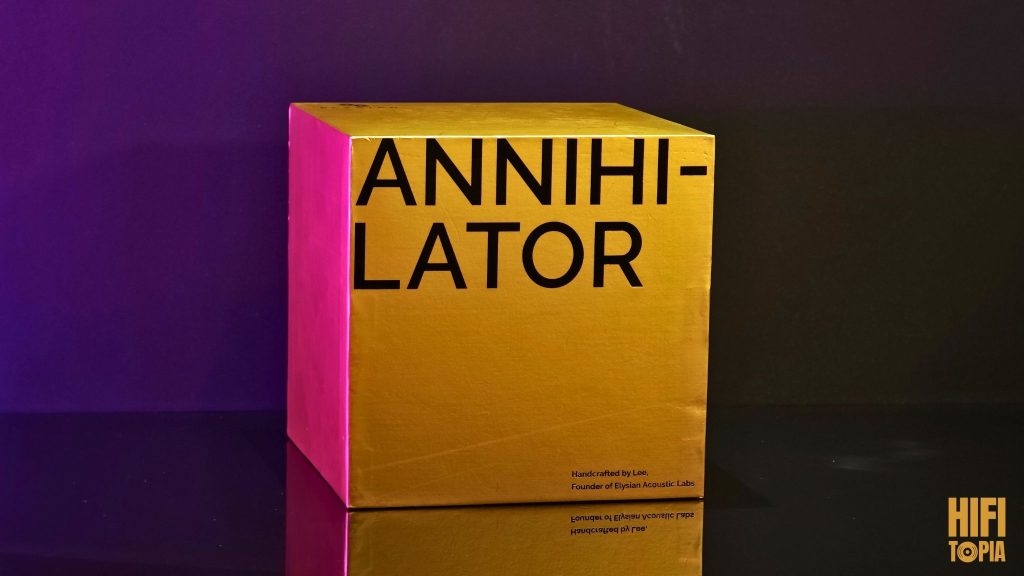
Design & Build
Package
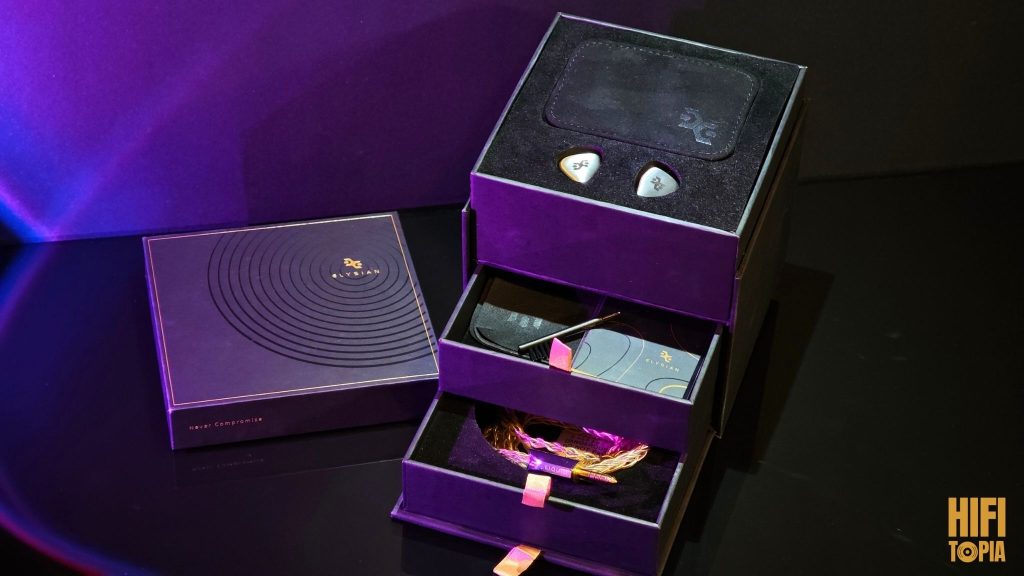
The Elysian Annihilator comes in similar boxes, with the packaging varying depending on the model you purchase. The gold and silver versions feature two compartments, while the titanium version has three; however, the contents of the box are the same across all versions. Here is the complete list of what comes in the Annihilator 2023 box:
Annihilator Box Content
- Elysian Acoustic Labs Annihilator (2023) IEMs (Left and Right earpieces)
- Stock Upgrade Cable (Liquid Links cable with Pentaconn Ear connectors, typically terminated in 4.4mm balanced or 2.5mm/3.5mm depending on order selection)
- Premium Carrying Case (Leather/hard-shell protective case)
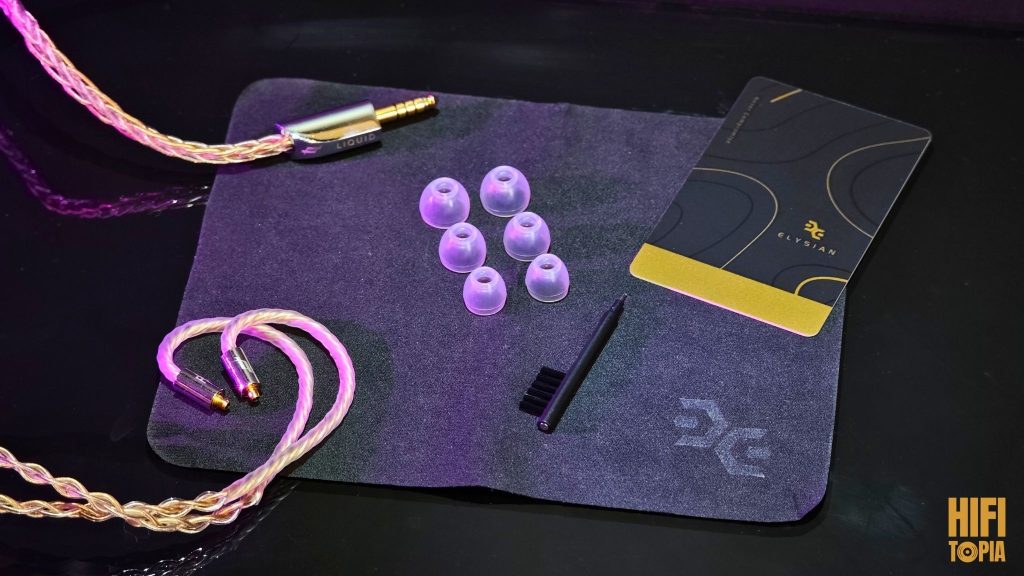
- SpinFit Silicone Eartips (Assorted sizes: S, M, L)
- Cleaning Tool / Brush
- Microfiber Cleaning Cloth
- Warranty Card and Authenticity Certificate
Shells & Cable
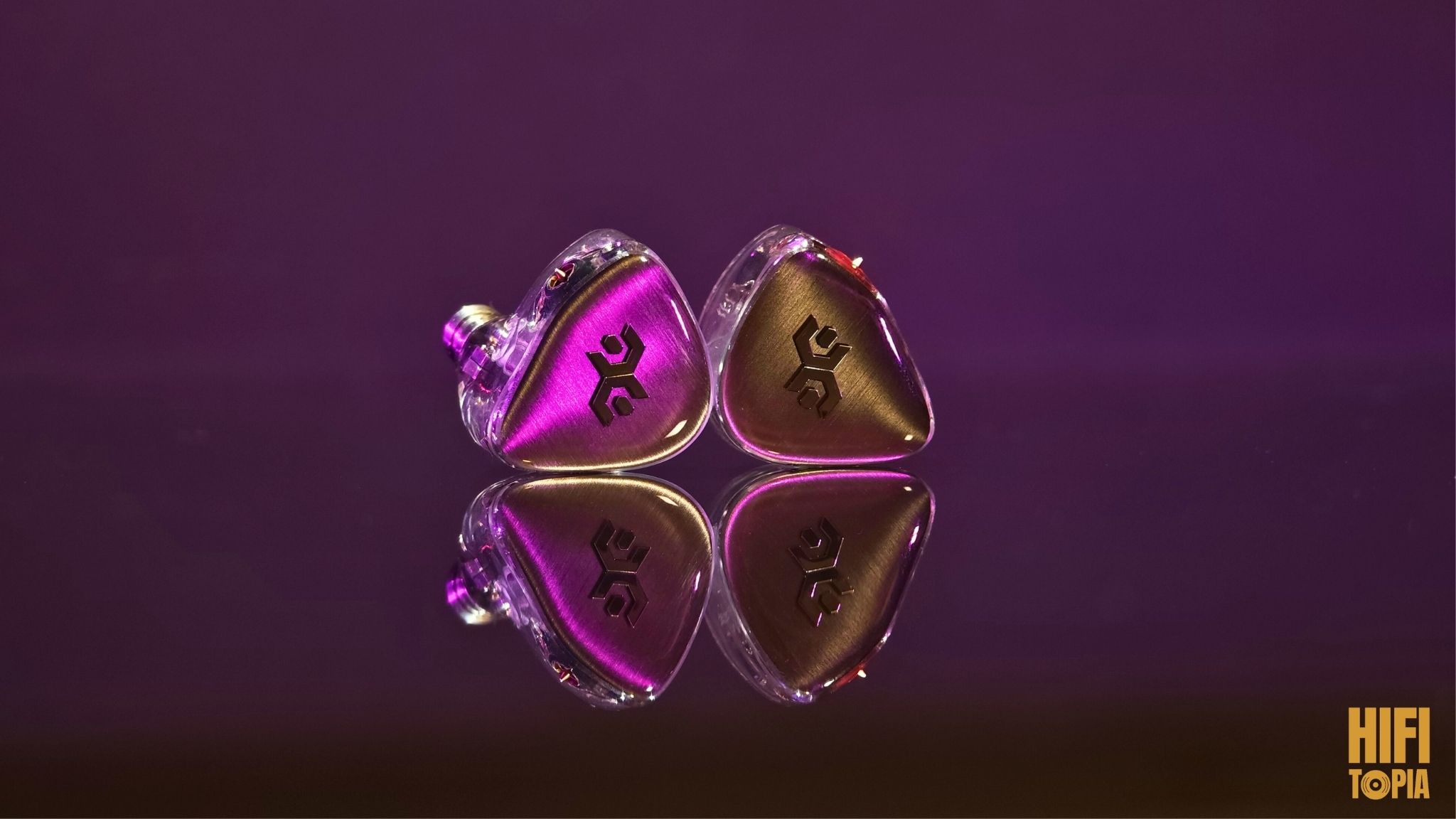
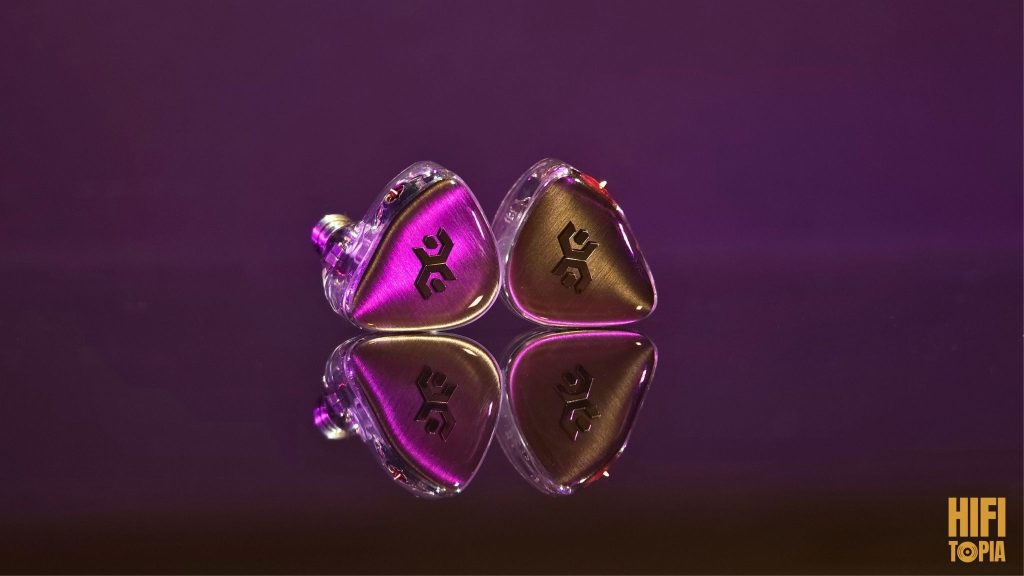
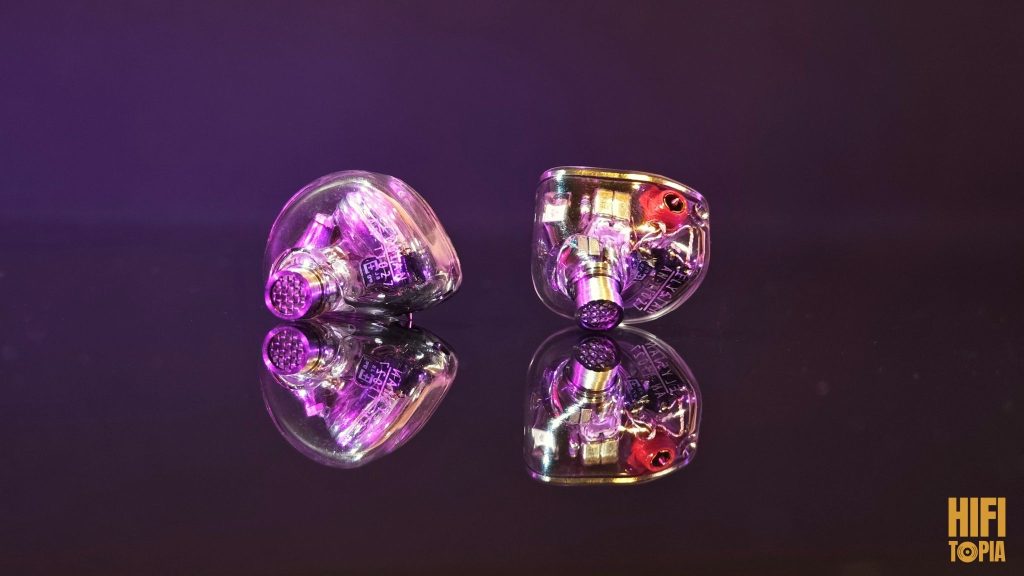
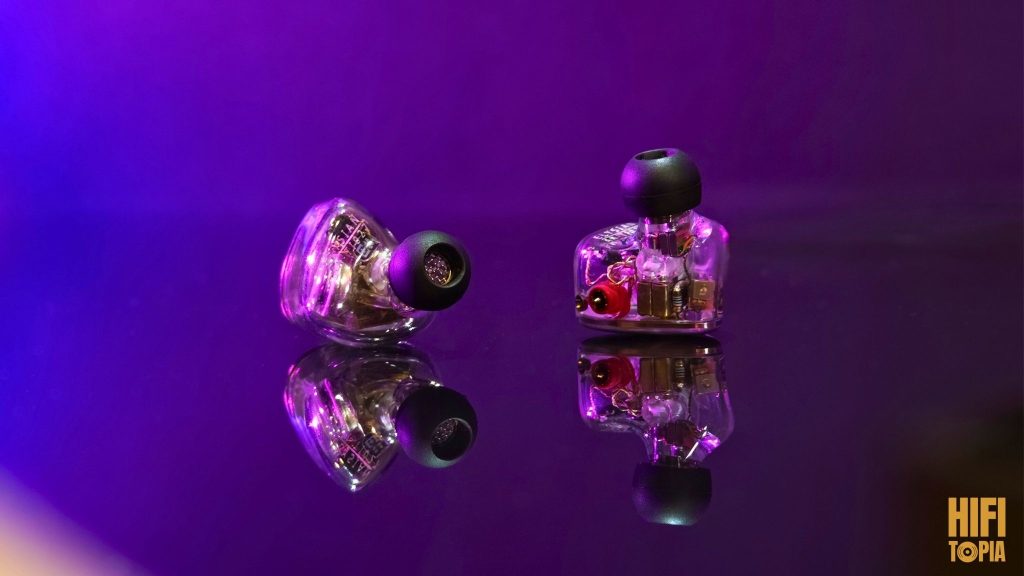
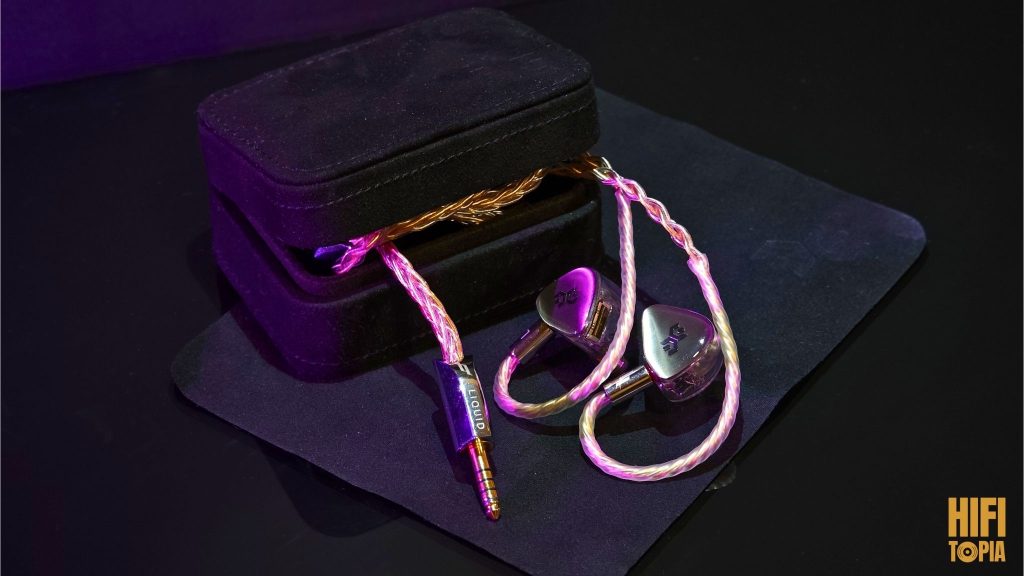
From a design perspective, the shells are like gems. The Elysian Annihilator features the large shell design we’re used to seeing in high-end IEMs. The nozzle is a bit thick, and the 7-driver configuration visible through the transparent shells looks like a work of art. While this design might be challenging for people with very small ears, it didn’t cause any discomfort for me or anyone close to me who uses these IEMs. The resulting isolation and fit comfort are fairly average. Of course, knowing that the Annihilator isn’t the kind of IEM you’d listen to on the subway amid loud noise, this isn’t really that important, to be honest.
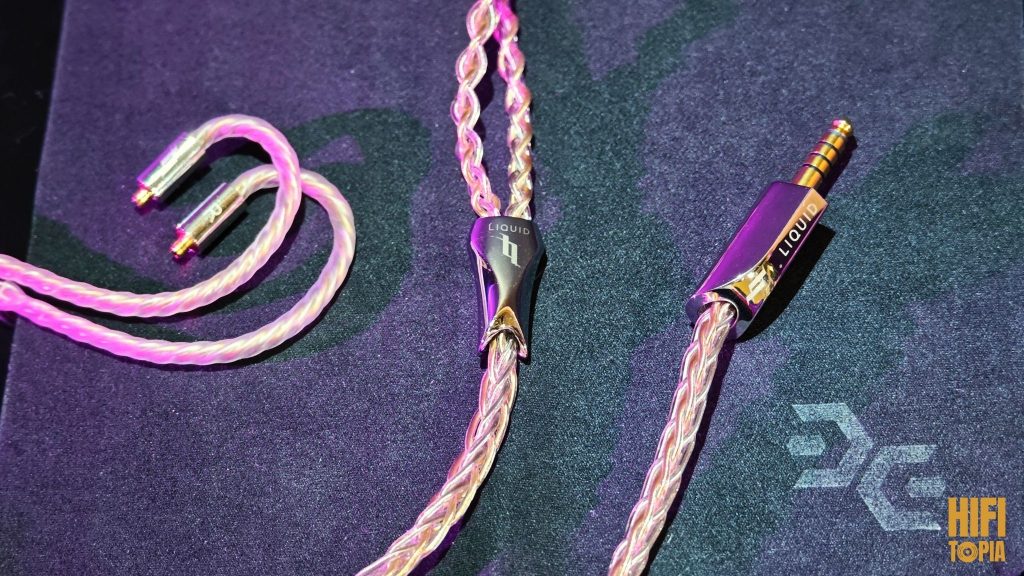
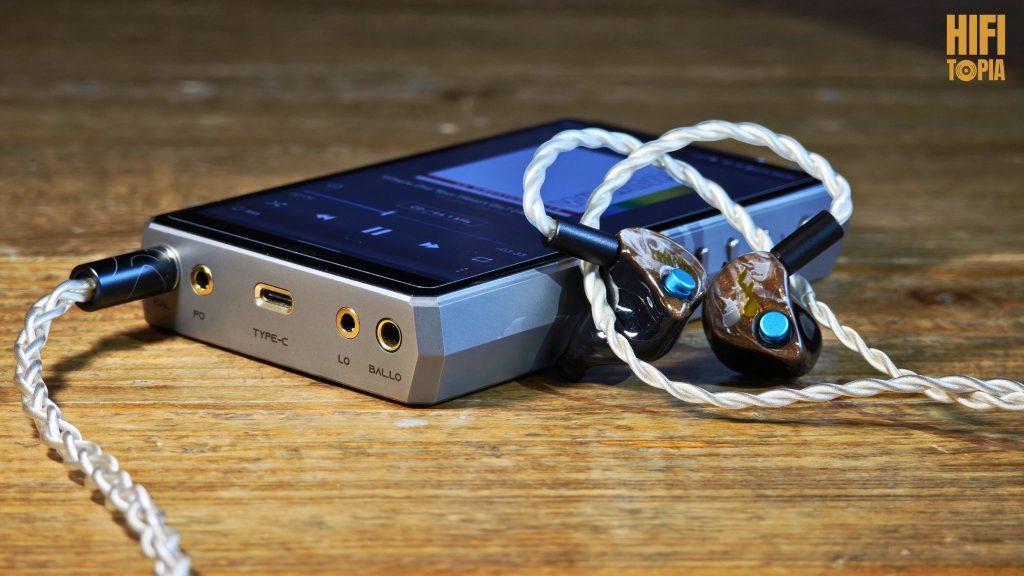
The Annihilator comes with the Liquid Links Martini. This cable, which you can purchase for $350, is made of gold-plated copper and palladium-plated silver wires. While I find this cable quite successful, as someone who has installed at least half a dozen upgrade cables on the Annihilator, I must point out that upgrading the cable makes sense for this system. The Annihilator responds significantly to a cable change. Of course, I have no complaints about the stock cable, the Martini is an excellent choice for a stock cable. I suppose my only gripe is the overly thick jack design. I actually needed an adapter just to connect it to the D16 Taipan because of this. Other than that, it’s a fantastic cable.
Case & Tips & Others
To be honest, I’m going to set my praise aside for now. It’s tragicomic that such an amazing sounding IEM only comes with three pairs of Spinfit. Also, the hard case that comes with it isn’t very practical. The cloth is nice, though. I guess its the most short part of the Annihilator review 🙂
Synergy
Astell Kern KANN ULTRA With Elysian Acoustics Labs Annihilator (2023)
Let’s talk about our famous prince, the Annihilator. There is something very interesting in this match. Oriolus Monachaa, whose pairing you have just read, is an iem with a quiet midbass and a sound opposite to Annihilator in terms of character. Now, if that match is good, this one should be bad, right? That’s where things change.
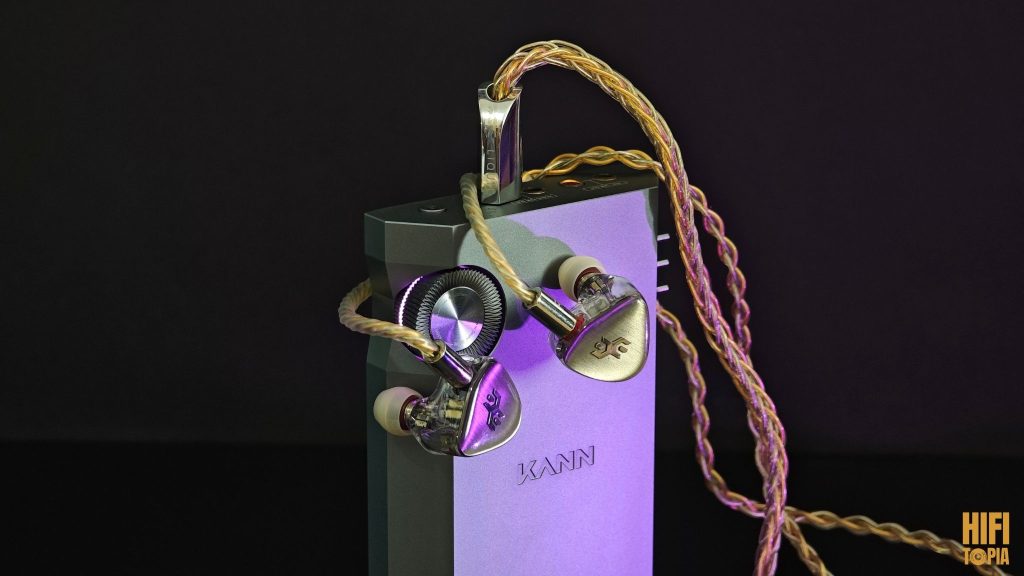
Annihilator is an iem with aggressive positioning. So the instruments, the vocals, almost every sound is on the same plane and with the same intensity. You hear everything focused at the same time. Astell Kern KANN ULTRA, on the other hand, pushes the vocals and some of the mid slightly forward. And this adds a very sweet color to the sound and increases the listening pleasure. And it doesn’t stop there. This gentle mid touch slightly suppresses the already excessive midbass. This is strange because when I refer to another source, KANN ULTRA adds midbass to the Monachaa. And in both pairings the amplitude fits perfectly. I think this is due to the midcentric timbre and the high power trying to flatten the graph (watt x impedance curve). If you have another opinion on this subject, let’s meet in the comments at the bottom.
Let’s come to this precious match in our subject. I have a comfortable sound that I can turn up the volume as much as I want, but this softness does not detract anything from the technique. I hear a very natural and resolving sound and the tonality goes to every genre. The pairing of two very well-designed sound design devices feels like a waltz in my ears. My score? 10/10 with a hat removed from my head.
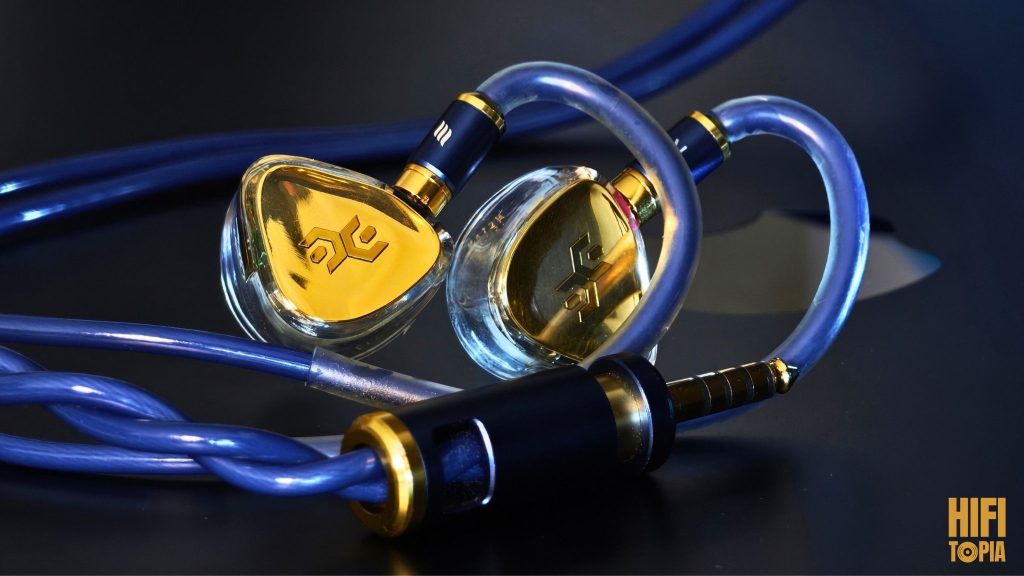
Elysian Annihilator 2023 & Effect Audio Code 24
Squeezing a cable pairing between DAP pairings: LOL, that’s totally me.
The Effect Audio Code24 earned its place in this review because its interchangeable connector design provides Pentaconn connectors compatible with the Annihilatore. We could say the same thing about the Fusion 1.
Of course, you can use any 2-pin cable you want with the help of 2-pin-to-Pentaconn adapters. I did that too, but using a cable with a direct Pentaconn connector is much better.
Now, let’s talk about the Code24 pairing. Compared to the stock cable, it spreads out the harmonics a bit more, thereby achieving greater separation. Additionally, one of its most noticeable effects is bringing out more detail in the lower frequencies. The overall presentation feels more layered and relaxed: compared to the stock cable, the upper mids and lower treble have a more laid-back character. Instruments resonate in a more spacious soundstage, and textures are more clearly discernible. The Code24 outperforms the stock cable in terms of holographic imaging. For $800, this level of upgrade (at least on a system where the source component is top-tier) seems quite appealing.
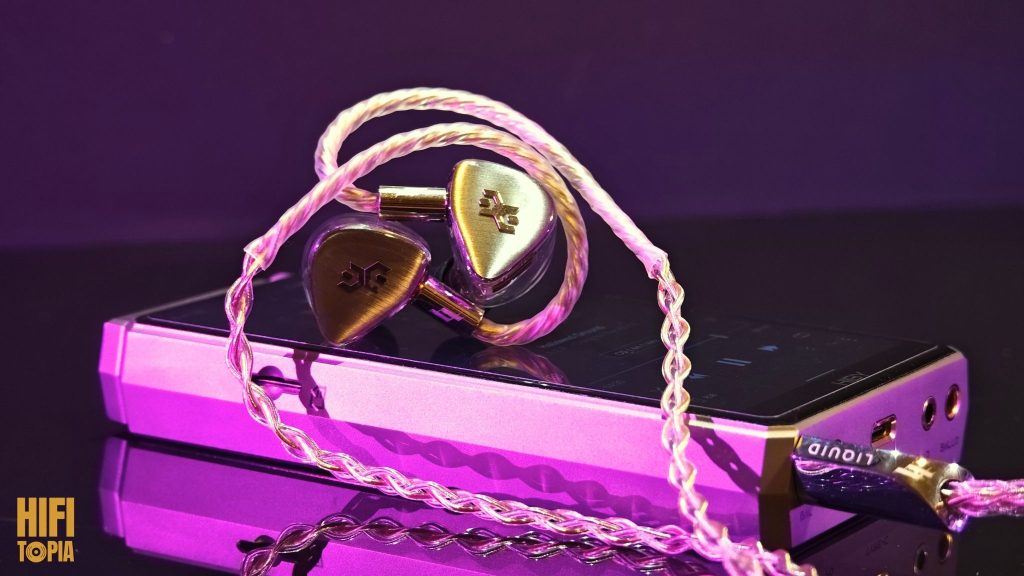
Elysian Acoustic Labs Annihilator 2023 & Hiby RS8
The Elysian Annihilator and OG RS8 are one of the best possible pairings. Listening sessions were generally conducted with the H gain setting and the 4.4mm output connected to an AB-class amp. With this setup, the sound you get offers a high-fidelity, highly technical experience along with a bit of flexibility (including turbo mode and other settings). The recordings sound like they’re coming from a vinyl record, but with much higher resolution and a more cohesive sound. The low-end emphasis is both deep and full-bodied, while the mid-bass is slightly more restrained in this setup than usual. I’ve always enjoyed listening to the Haggard tracks I usually use for testing in the midrange, so I forgot to comment on them 🙂
I don’t really need to say much about the treble. When listening with the OG RS8, I can say that compared to the Chord Hugo2, the sound is much more controlled and has a more natural extension.
As for the technical side of things, at this level of pairing with high-end DAPs and source devices, you no longer have to worry about resolution or detail. The sound I heard here is more than enough to put almost all of us out to retirement.
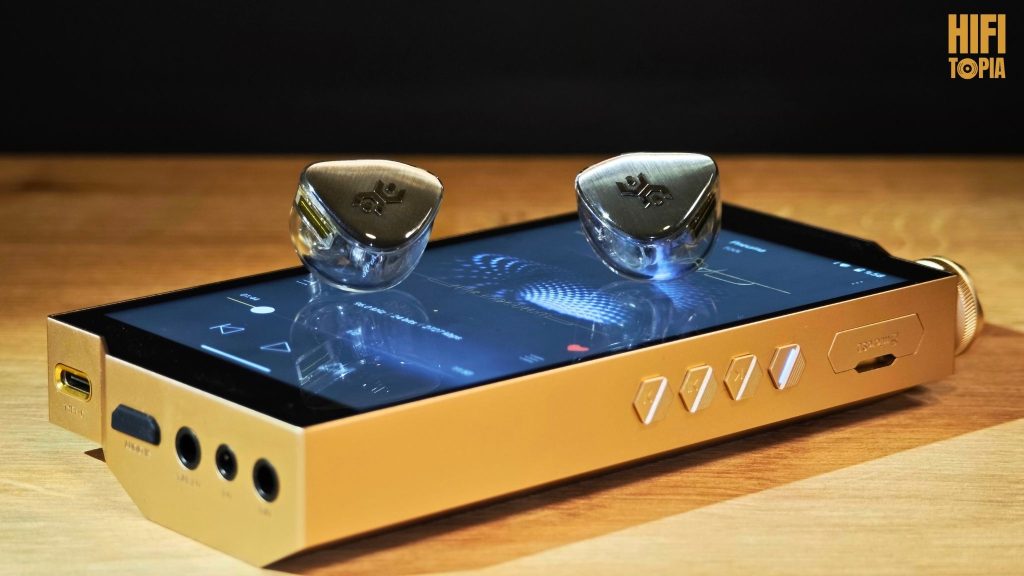
Elysian Annihilator 2023 & Hiby RS8II
…more than enough to put almost all of us out of a job. But what about the rest of us? This is for you.
I listened to all the general tracks with a weighting close to that of a Class A amplifier (the RS8II lets you adjust the weight distribution between Class A and Class AB). I did my listening tests using a 4.4mm connection via M-H gain and made extensive use of turbo mode, various filters, and MSEB.
The RS8II is currently one of the best DAPs available. That’s undisputed. But what about its performance with the Annihilator?
To help you visualize it: Although the results I obtained were technically superior to my listening sessions with the Hugo2, the sound didn’t have the same harsh character as the Hugo2. For those familiar with the subject, this means the RS8II is better than the Hugo2. Yes, that’s correct.
Pairing this device, which represents the absolute pinnacle of portability, with the Annihilator delivers an orgasmic experience. Add to that the PW Audio 1980s and Brise upgrade cables using a 2-pin adapter, and the result will take you to one of the ultimate heights an audiophile can reach.
At this point, I really don’t want to get into specifics about bass, treble, or details. This is a sacred experience, and an expensive one at that. You’ll get fantastic results with other IEMs (Fei Wan, Machbet, or GM) as well, but the Annihilator 2023 stands out here with its unique tonal character.
All in all, paired with upgrade cables, this combination is dangerously utopian. It carries the risk of burning a huge hole in your pocket 🙂
Comprasions
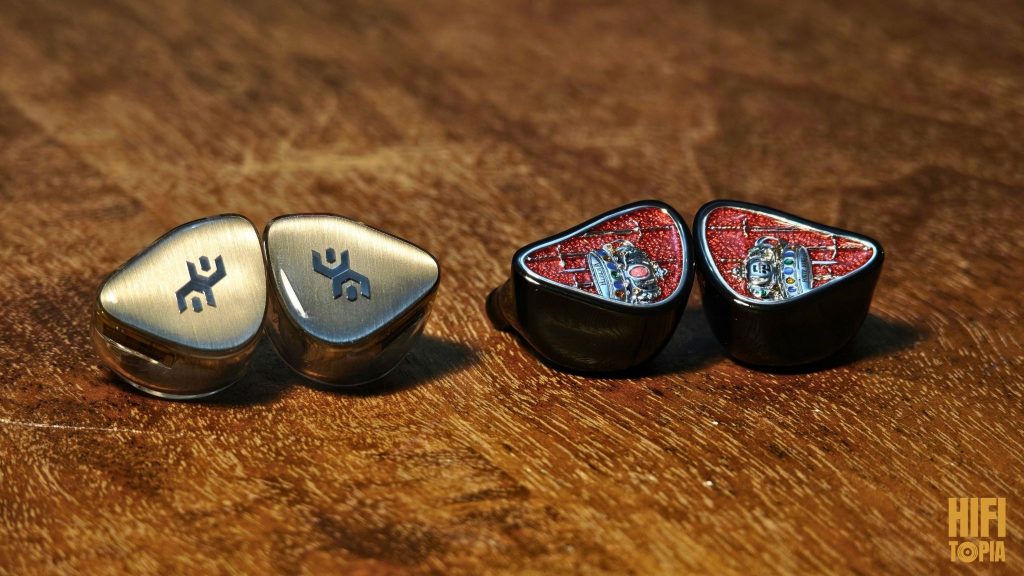
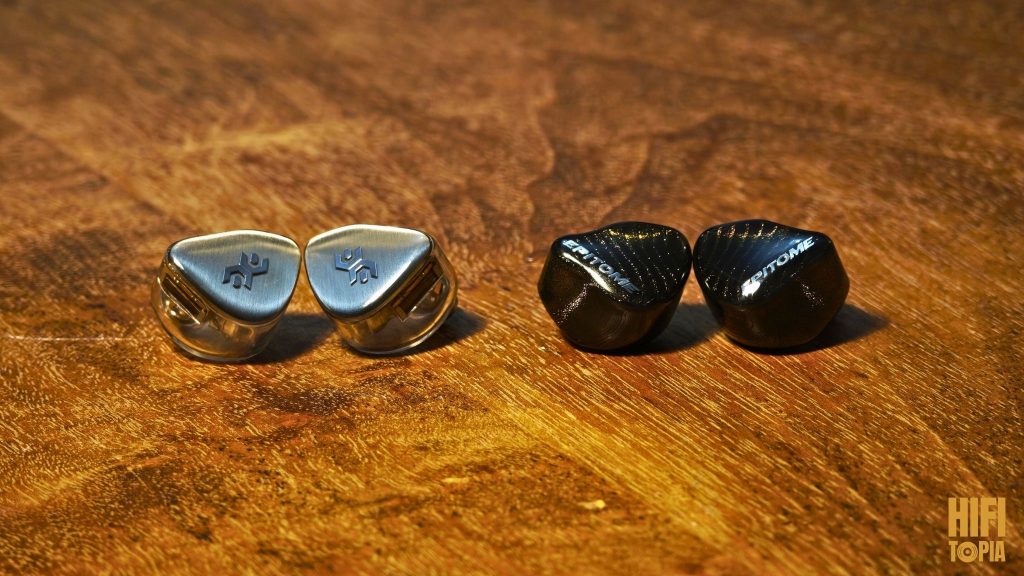
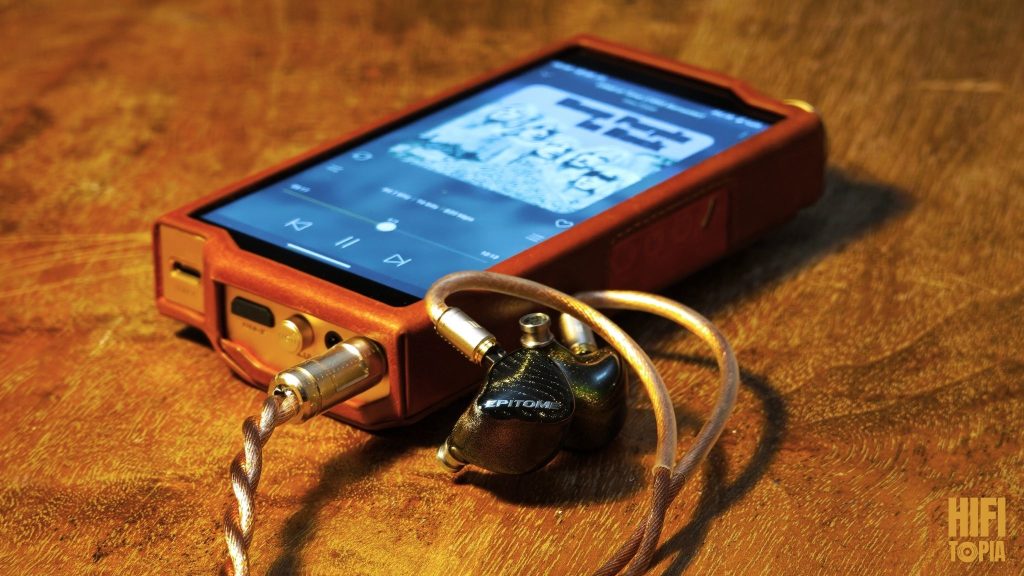
iBasso Epitome VS Elysian Acoustic Labs Annihilator 2023
This comparison was conducted using the Hiby RS8II. Both IEMs were listened to with the JVC FX10 tips, using stock cables. The Annihilator 2023 was tested at M gain with a 4.4mm output, while the Epitome was tested at M and L gains with 3.5mm and 4.4mm outputs, respectively. The reason for this difference is the vast gap in the sensitivity between the two. The amp stage was kept balanced between A and AB, and the turbo was turned off.
The iBasso Epitome and Annihilator are IEMs with two very different characters and sound signatures. The Epitome produces a mid-centric sound with a neutral tonal colouring. The Annihilator produces a warm, full-bodied sound that could be described as V-shaped but with subtle W-shaped colorations. Fundamentally, this makes the Annihilator more enjoyble, while the Epitome is more natural, realistic and versatile.
Bass
This is where the difference between these two giants is most obvious and significant. The Epitome operates on a much more neutral line and produces significantly less bass; however, the subs are slightly dominant in the internal bass balance. The Annihilator, on the other hand, features large, thick bass, produces much more rumble, and has mid-bass taking the lead in the internal bass balance. Despite the difference in quantity, the Epitome goes much deeper, while the Annihilator’s bass is closer to the surface and more explosive. Epitome is superior in terms of bass quality.
In terms of entertainment in this category, the Annihilator is certainly the preferred choice, but let’s examine these at this level using the instruments:
Drums: The Epitome has a fairly light yet deep drum hit; despite this lightness, the amplitude transmission is excellent, though the authority is low. The Annihilator, in the simplest terms, smashes through—it’s still deep but feels more present on the surface. Still, the volume reproduction and authority are incredible. I’m basing this assessment specifically on three tracks: the drums at the beginning of “Equus” by Ne Obliviscaris, the rapid-fire drums in Pantera’s “Domination”, and the slow drums in Dawid Podsiato’s “Where Did Your Love Go?”
For the bass guitar, I’m listening to Primus’s “Jerry Was A Race Car Driver”: The Epitome is positioned further back and has less volume, yet it delivers a bass guitar with an exquisite texture. The Annihilator, on the other hand, is slightly more full-bodied and more upfront, but it produces a bass guitar with a simpler layered sound. The same observations apply to the double bass on Petra Magoni’s “La voce del silenzio,” though there’s a subtle nuance: since the sub-bass presence is much stronger on the Annihilator, there’s a timbre difference that directly affects the sense of proximity. With the Annihilator, the double bass is right next to your ear and has a physical presence; with the Epitome, it’s somewhere on the stage and comes from a distance—the physicality is less pronounced, but the texture remains intact.
Mid
Things really heat up in the midrange. Both have their own unique character in the midrange. The iBasso Epitome aims for naturalness and transparency here, but as it approaches the treble end of the spectrum, it steps on the gas and shows a lit energy in the upper mids. The Annihilator, on the other hand, features a complex tonal character in the midrange that specifically highlights the lower mids and guitars. Both are successful at capturing a natural sound in the midrange, but their tonal signatures are very different—it’s as if they’re pushing the limits of two distinct extremes. Epitome has a more transparent and neutral midrange and does a fantastic job of layering here. However, when it comes to the transition from upper mids to lower treble, Epitome brings the sound a little close to the surface in that region. Annihilator, on the other hand, offers a much warmer midrange presentation. However, Annihilator is also too thick in the lower mids. Both produce excellent and smooth female vocals. Epitome produces a more neutral sound in mid-range and occupies more area on soundstage.
Haggard – “The Final Victory,” “Chapter III: La Terra Santa,” “Per Aspera Ad Astra,” “In a Pale Moon’s Shadow”: With a full-bodied orchestra, varying tempos, and vocal diversity, these tracks cover a lot of ground. In terms of presentation, the Annihilator has a more substantial body and features multi-layered focus with more breathing space. Epitome, on the other hand, produces a more emotional sound here with a laid-back presentation in the lower mids and an intimate one in the upper mids. Annihilator has better solo violin here. Epitome is more successful in piano strokes. Both are superb in female vocals. Epitome leads in wind instruments, male vocals, and brass.
Allegraon’s “Concerto in Dm,” Brass Against’s “Lateralus,” and Katatonia’s “Decima”: Overall midrange consistency and the ability to handle multiple instruments are slightly better on the Epitome. However, when it comes to the lower treble, the Annihilator maintains distance more effectively. While harmonics and vertical positioning stand out in the Epitome, the Annihilator produces a more cohesive midrange and has more successful lateral positioning. Overall texture and positioning accuracy in the midrange are better in the Epitome.
While the presentation difference in this area makes a technical comparison difficult, it offers you a much more significant divergence than just a matter of superiority: A balanced midrange presentation with thick, full-bodied lower mids? Or a presentation that starts neutral, rises as it approaches the treble, and remains laid-back despite compression and surface-level issues in the transition? Both have their flaws yet possess harmonious beauty, and they are very different.
Treble
The treble section of this comparison was the most enjoyable part of the entire review for me. As you know, the Annihilator is an IEM famous for its treble, and everyone says it has the best treble. The iBasso Epitome has such an excellent high-frequency range that it doesn’t just compete with the Annihilator in this area—it’s practically challenging its dominance.
Starting with the lower trebles, the Annihilator seems to have the edge. With a more stable transition from the upper mids to the lower trebles, the Annihilator offers both greater control and a more desirable tonal quality in this range. In the very high frequencies, the Epitome brings bell bodies, upper violin notes sounds slightly closer to the surface. Moving up a bit, the competition begins in the mid-trebles: both IEMs produce incredible accuracy and a very natural cymbal timbre here. Although both have high energy here, they maintain a sense of distance. In terms of positioning, I’m casting my vote for the Epitome by a slight margin. In making this assessment, I’d like to note that I drew heavily on tracks like “Blind” by Korn, “High Hopes” and “Time” by Pink Floyd, and “Gotta Serve Somebody” by Bob Dylan.
The battle continues fiercely in the upper treble and the airy frequencies that follow: Here, the Annihilator stands out with its unique positioning and distinctive sense of space. Additionally, it adds a touch of airiness to the warm tone with just the right amount of energy. With the Epitome, the situation is quite different. When primary focus is on the lower treble, you don’t really feel much airiness here; this is more of a natural, range-appropriate brilliance. In this area, Epitome’s natural high-pitched sound production is unparalleled, putting it a notch ahead of Annihilator in that sense. Technically, both are incredibly successful in terms of extension control and consistency. In this regard, I find them equal.
Tchaikovsky – Overture 1812, “Sykfall” by Adele, “Just A Little Lovin’” by Shelby Lyne: When considering the overall treble character, the Epitome demonstrates a stronger presence in the lower-mid treble in terms of energy, focus, and body. The Annihilator, on the other hand, features a smooth transition from the mid-treble to a gradually rising energy and focus in the upper-mid treble. However, looking at the overall spectrum, the treble is more prominent in the Epitome and, frankly, has a bit more texture.
Technique
The iBasso Epitome and Elysian Annihilator 2023 are two heavy hitters from a technical standpoint. Both boast incredibly high resolution; the Epitome is slightly more homogeneous, while the Annihilator has better organizational capabilities. When it comes to detail and texture, the Epitome is a step ahead, while the Annihilator leads in terms of composition and layering.
The difference in homogeneity is particularly noticeable in the lower frequencies: the Epitome has slightly higher-resolution bass. In the mid and high ranges, they are nearly identical, but in terms of texture, the Epitome performs better in the midrange. Additionally, the Epitome captures nuances more effortlessly in certain areas of the midrange. Annihilator closes the gap it faces here as it approaches the high frequencies.
Epitome has a more transparent and holographic soundstage. It’s well-defined vertically, has good depth, and is spacious but not overly wide. The Annihilator, despite having less depth and spatiality, offers a wider soundstage. Both feature very precise imaging. The Annihilator has a darker background and creates a sense of playing in space, drawing you in. The Epitome, on the other hand, has a holographic yet homogeneous structure that surrounds you.
In terms of separation, things get a bit complicated: they exhibit different levels of separation at different points. Simply put, Epitome separates better at lower frequencies. In the lower mids, Epitome offers better separation, while in the upper mids, Annihilator does. In the trebles, while there’s similar separation in the lower trebles, the nose difference makes the separation in the upper trebles more pronounced in Annihilator.
I’d like to add a small technical note here: These two high-end iems have different positioning preferences and serve different purposes at this point. The Epitome brings the upper mids closer to you and delivers deep subs with a neutral bass response. The Annihilator, on the other hand, prepares you for the upper trebles with a mid-bass and a slight vocal push. Here, the neutral sound preference and fidelity to the natural range set Epitome apart.
Apart from their different timbres and completely different positioning preferences, both produce a natural and realistic sound. Here, it comes down to personal preference: choose the Annihilator for closer bass, drums, and male vocals; choose the Epitome for closer female vocals, wind instruments, and brass. These preferences do not alter the fact that both produce sound with very high consistency and accuracy.
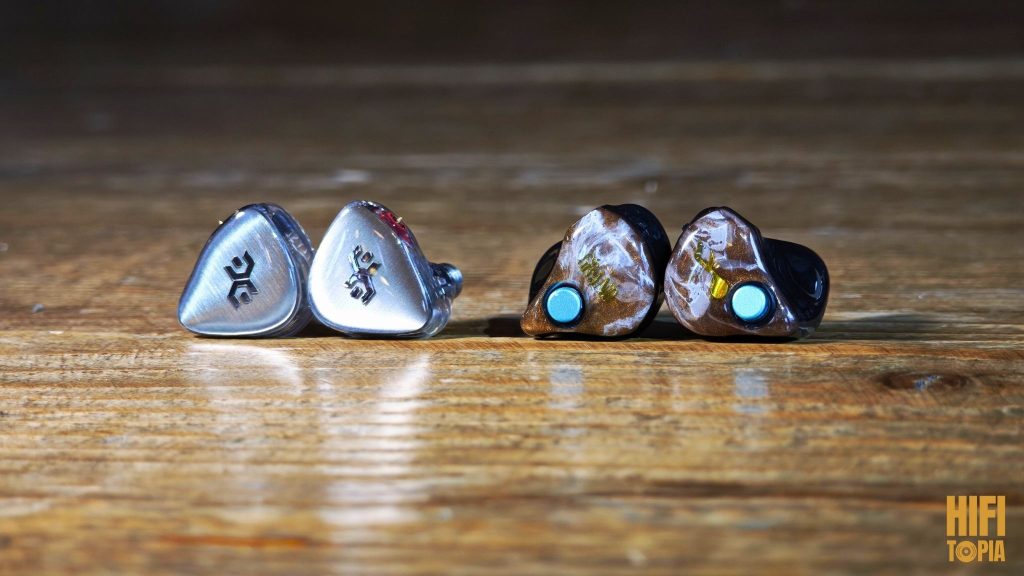
FatFreq Grand Maestro ($3,143.00) VS Elysian Acoustics Labs Annihilator ($3000/$3200)
Ronaldo or Messi?
I made this comparison using RS8 with H gain in OS mode from the 4.4mm port on the AB amp stage. Both beasts were on stage with stock cables, and both had JVC FX10 tips attached. The Grand Maestro was listened to with the blue filter and the switch turned off.
Overall Tonality & Sound Profile
Both have warm sound profiles but are quite well-adjusted in terms of coloration. The Annihilator has a more entertaining and exciting tone and adds a noticeable midbass body to the sound. The Grand Maestro is more balanced and creates a sub-authority effect in the sound. The Annihilator’s sound profile features V- and W-shaped colorations, while the Grand Maestro contains more typical U-shaped colorations. In terms of presentation, the Annihilator creates more impact, but the Grand Maestro is more stable during detailed listening.
Bass
In the lower frequencies, the Grand Maestro stands out; it’s one of the best subwoofers I’ve heard. The Grand Maestro is much more sub-focused in the low frequencies and has tremendous note weight. The Annihilator, despite its big bass, is more midbass-focused and booms closer to the surface. In this area, depth and volume related to positioning are better on the Grand Maestro. Instrumentally, the Annihilator has very crisp and full-bodied bass guitars. Despite having different internal bass balances, both are fantastic with the double bass. Both are very fast and capable at capturing drums, with texture levels so close they’re almost identical. Still, the Grand Maestro is more successful with drums due to its ability to convey drum tension and the micron-level texture difference.
Mid
The midrange is incredibly good on both, with areas where they show themselves and surpass each other. When it comes to vocals, Annihilator is incredibly good with female vocals and surpasses Grand Maestro. When it comes to male vocals, Grand Maestro is more consistent. Since the extra midbass on Annihilator also affects the mids, Grand Maestro offers a more natural tone in the lower mids. However, when it comes to guitar, Annihilator takes the lead again, with an exquisite tone and unmatched emotional delivery. Both are incredibly good and equal when it comes to violins and wind instruments, but here I’m giving my vote to Annihilator by a nose for the violin.
Treble
When it comes to treble, the equality is broken again. First of all, I want to congratulate Grand Maestro for this superb tuning and for competing with Annihilator in the treble range. It really has incredible trebles. However, Annihilator is an IEM famous for its trebles. If you ask what the difference is, Annihilator definitely has more energy in the trebles. In terms of control, both are superb. When it comes to clarity and playing note by note, the Annihilator is a little better. The GM is still fantastic, with 99/100 trebles, and definitely not inferior to the Annihilator in terms of tone. However, despite its high treble energy, the Annihilator maintains control, blending the trebles note by note and with the right tone. That’s why it gets 100/100!
Technique
When it comes to pure technique, hats off to both. They are equal in terms of resolution, but here’s the thing: the Grand Maestro is more homogeneous. That is, the Grand Maestro offers the same high resolution at every frequency with incredible consistency across the entire spectrum. The Annihilator, on the other hand, is slightly more resolved in the upper frequencies than in the lower frequencies (and a significant part of this is perceptual). This difference in homogeneity may mean nothing to you, but this part of the comparison is technical. When it comes to detail, we can say similar things; they are the same, but the Grand Maestro has more nuance in the bass. The Annihilator has more nuance in the upper treble. When it comes to imaging capabilities, the Grand Maestro stands out in terms of soundstage. The Grand Maestro is slightly deeper and can extend further in a spatial sense. The stage widths are almost equal. In terms of positioning, both are true legends and equals. Only the Grand Maestro has a more distant and sweeter positioning in the lower frequencies. In terms of layering, the GM stands out in some areas, but they are equal overall. In terms of treble resolution, the Annihilator is ahead by 1%.
Now that the comparison is complete, I leave it to my valued readers to evaluate these two beasts and their advantages alongside their prices and make their choice.
Sound
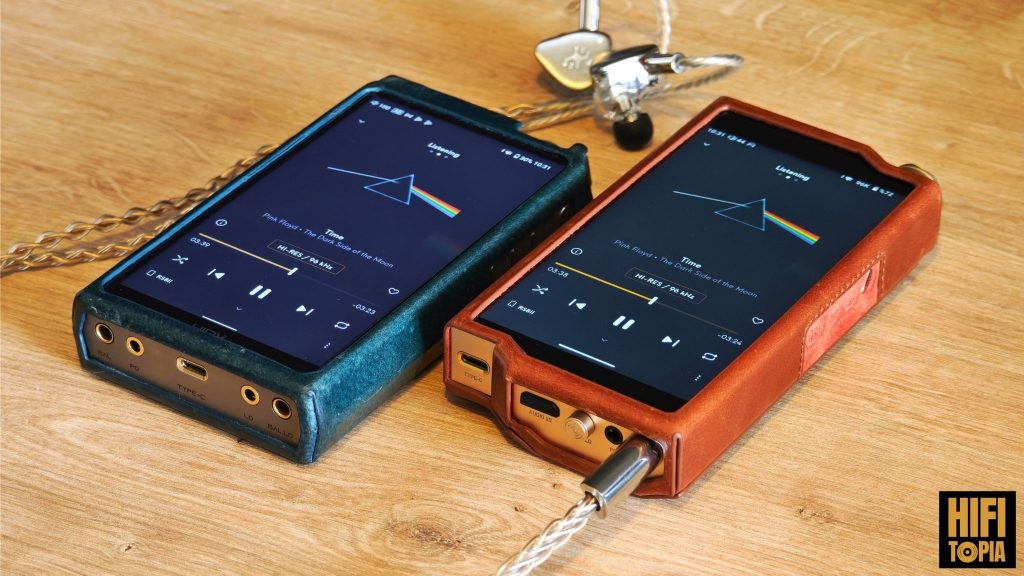
A few minor details before I start my listening session: First of all, I did most of my listening with the RS8 and RS8II because I really love these pairings. I also tested devices like the Hugo2, Sony WMA1ZM2, AK Kann Ultra, D16 Taipan, and M9plus with the Annihilator. I generally conducted my listening sessions using JVC FX10 and Divinus Prizm tips. I listened using stock cables 80% of the time and upgrade cables 20% of the time.
I’m writing this to clarify: the sound reviews you’ll read here were prepared using the best possible pairings and with a high-end source device budget. Please keep this in mind.
Elysian Annihilator’s Tonality
The Elysian Annihilator is actually an IEM with a general tonal character that could be described as V-shaped. However, it would be inaccurate to dismiss the mastery of its tuning with such a simple term. The Annihilator goes far beyond the typical V-shaped or Harman variations on the market; it features a hyper-dynamic, ultra-high-resolution, and uncompromising sound profile that hits the listener right in the face. We refer to it as “V,” but it actually features additional tonal nuances that resemble U-shaped or even W-shaped profiles in certain areas. Additionally, the distinction between the intensity of the sound and the positioning of the different frequencies is very evident here. Both are related to tone, but they are very different phenomena. Annihilator brings musicality and technical prowess together at an entirely different level.
Bass
The low frequencies of the Annihilator 2023 come to life thanks to the legendary Foster dynamic driver. The bass response isn’t quantitatively at an excessively bloated “basshead” level; however, the quality, elasticity, and texture of the bass are of exceptional caliber. There are some subjective observations here. First of all, the bass isn’t positioned as deep or as far back as it could be. The 3D spatial depth is incredible, but a bass position farther from the surface might also be preferable. Also, the midbass is truly powerful. I believe having this much midbass is a wise choice for amplitude control. It ensures flawless extension down to the lowest octaves and reduces bass bleed to zero.
There’s a sense of satisfaction here both for entertainment and in terms of instrumental performance. In complex metal tracks, double-time drum beats, or fast electronic bass transitions, there’s not the slightest hint of muddiness or lag. The bass is tight, with crisp definition, and delivers that physical impact directly when needed.
Mid
The midrange calibration of the Elsyian Acoustic Labs Annihilator 2023 completely rejects the notion of “let’s create a warm sound—a warm, recessed midrange.” The goal here isn’t to produce a romantic tone; it’s to lay bare the distinction and transparency of the recording in its rawest form. It features a more laid-back presentation where the sound’s character becomes relatively harsher in the midrange, yet retains a transparent tone.
The lower midrange is distinctly clean, neutral, and maintains a solid foundation. The strings of the acoustic bass, the cello body, and the baritone vocals are separated by extremely tight and clear lines without blending into one another. The upper-midrange is high-energy and exceptionally articulate. Guitar distortion, the friction sounds of string instruments, and wind instruments play with sharp dynamism. The violin’s tone is among the most accurate I’ve ever heard. There’s a vast sense of spaciousness between the instruments. Even during complex acoustic passages, piano chords, acoustic guitar arpeggios, and vocals never mask one another; each element remains crystal-clear in its own distinct layer of the mix.
Treble
The best.
The Elysian Acoustic Labs Annihilator 2023 has the best treble in many respects. You’ve probably heard this from others as well. Let me explain why that is.
The extension of the upper octave at 10 kHz and beyond is clearly superior to that of nearly every other IEM on the market. This design, which completely removes the ceiling from the soundstage, gives the listener a boundless sense of spaciousness and airiness. The attack sharpness of hi-hats, ride cymbals, and crash cymbals at the moment of impact, along with the subsequent decay process, remains distinct without even a millisecond of delay—even in the most intense metal and progressive jazz tracks. The Annihilator handles the incredible amount of detail it produces exceptionally well, setting it apart from many “IEMs with good treble.” The Annihilator’s treble is so natural and authentic, combined with such technical precision, that it’s truly one-of-a-kind.
In terms of presentation: The trebles are distinctly bright, luminous, and exceptionally assertive. The resolution and speed are so high that they deliver an extremely smooth, crystalline, and razor-sharp flow of detail. This inner tuning has nothing to hide; it possesses a structure that picks out every micro-detail with precision. At the same time, listening to the treble is so enjoyable that it never feels tiring or irritating. The Annihilator practically casts a spell even on people who don’t usually like treble.
Technique
We’ve always talked about this. For good timbre and high accuracy, both tone and technique must be excellent at the same time. Now we’re going to discuss the technique that makes the Annihilator so amazing.
The Elysian Annihilator, of course, offers very high resolution distributed with near-perfect homogeneity across the spectrum. However, this is hardly a feat compared to what we’re about to discuss:
The positioning of instruments on the soundstage is precise down to the microscopic level. Even in complex, multi-channel arrangements, the position of each instrument can be clearly identified. In terms of layering, fast bass transitions, foreground vocals, and background micro-percussion details flow independently across depth bands without clashing. The background on the soundstage is quite dark, which allows the micro-details to shine with crystal-clear clarity against the black backdrop. Thanks to the limitless extension of the highs, the sense of the soundstage is exceptionally wide and airy. While sounds extend far beyond the headphone housing on the horizontal axis, the sense of open space it provides on the vertical axis lends the soundstage a holographic sense of volume. The soundstage depth, meanwhile, offers an extremely distinct sense of perspective. There is absolutely no feeling of being enclosed in a cabinet; sounds spread freely across a wide area.
When all of these elements come together, the result is exceptional accuracy, crystal-clear clarity, and an entertainment factor that’s still as strong as ever, making the Annihilator truly, truly outstanding.

Last Words
There’s not much to say. The Elysian Acoustic Labs Annihilator 2023 is an incredible IEM. Three years have passed, and I still think it’s better than many of the newer models. If you can find it at a discount in the secondhand market or from old stock, I highly recommend it. Let’s see what the new version, the Annihilator 2026, has in store. That’ll be the subject of one of my future reviews 😉